
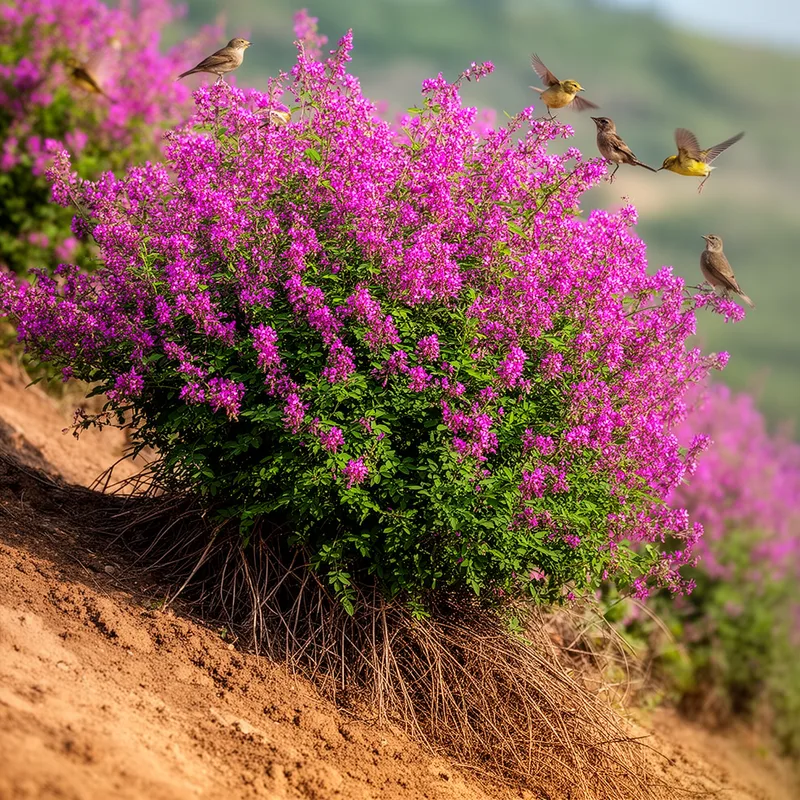
bicolor lespedeza
- noun
- US
- The bright rose-purple flowers of bicolor lespedeza add color to gardens in late summer.
Examples
-
The conservation team planted bicolor lespedeza to stabilize the eroding hillside.
-
Many landowners choose bicolor lespedeza because it attracts a variety of wild birds.
-
The garden was filled with bicolor lespedeza this spring.
-
Many landscapers recommend bicolor lespedeza for its beautiful flowers.
-
Many landowners choose bicolor lespedeza because it attracts a variety of wild birds.
-
The bright rose-purple flowers of bicolor lespedeza add color to gardens in late summer.
-
The conservation team planted bicolor lespedeza to stabilize the eroding hillside.
Synonyms

A small Asian bush with bright purple flowers that people often plant to stop soil erosion and feed birds
A small bush with bright rose-purple flowers planted to stop soil erosion and feed birds
Surface Forms
Morphology
The phrase is transparently compositional: 'bicolor' means two-colored and 'Lespedeza' names a plant genus, so the MWE denotes a Lespedeza plant with two colors. A B1 learner who knows both constituent meanings can readily infer this is a two‑colored shrub (botanical naming conventions make this predictable).
Etymology
Bicolor lespedeza comes from two parts: bicolor means 'two-coloured' and lespedeza is the name for a group of small shrubs. Picture a small shrub with two-tone rose-purple flowers — that image helps you remember the name because the flowers attract birds and the plant helps hold the soil.

