
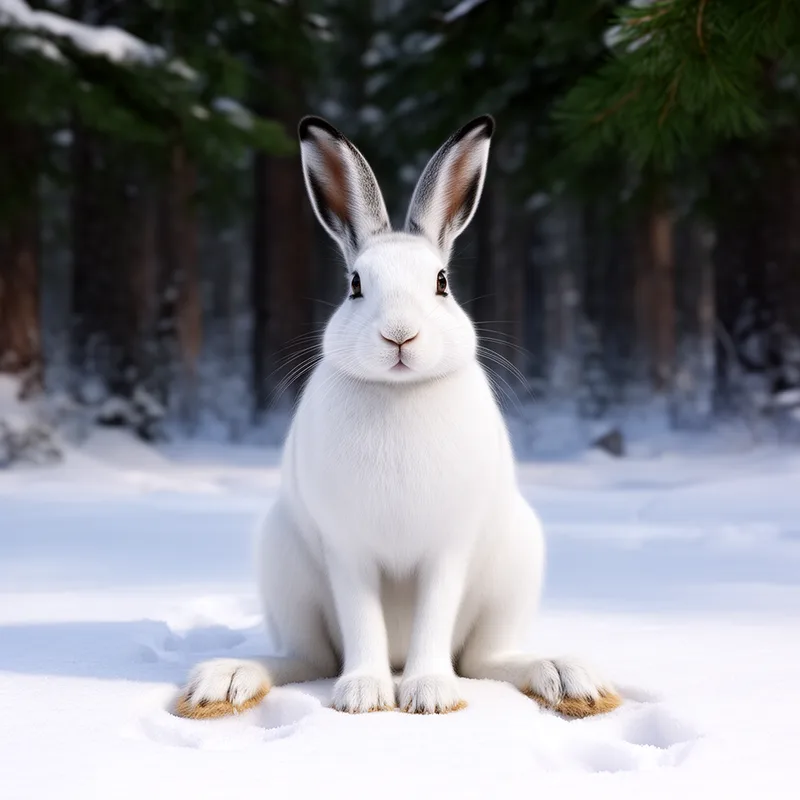
Lepus americanus
- noun
- /ˈlɛpəs əˈmɛrɪkənəs/
- Specialized
- In winter, the Lepus americanus uses its white coat as camouflage to avoid predators in the snow.
Examples
-
The Lepus americanus changes its coat from brown to white to blend in with the snow.
-
Snowy forests are the primary habitat for the Lepus americanus during winter months.
-
Predators find it harder to spot a Lepus americanus in the snow thanks to its seasonal camouflage.
-
The Lepus americanus is known for its incredible adaptability.
-
Have you ever seen a Lepus americanus in the wild?
-
The Lepus americanus is most commonly found in snowy forests, where it thrives during the cold months.
-
To survive in harsh winter conditions, the Lepus americanus changes its fur color from brown to white.
Synonyms


 1
6.5
1
6.5
A large North American hare with big feet that turns white in winter and brown in summer
 1
3.9
1
3.9
A large North American hare with very big back feet that turns white in winter
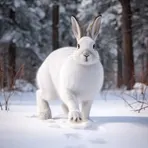
A large North American hare with big furry feet that turns white in winter
Surface Forms
Morphology
Lepus + americanus
The binomial name is compositional: 'Lepus' denotes the genus of hares and 'americanus' functions as an adjectival epithet meaning 'American' (of America). If a learner knows both constituents, the phrase transparently denotes a hare from America (i.e. the North American/snowshoe hare); scientific Latin names are used internationally and follow a predictable genus + qualifier pattern.
Etymology
Lepus americanus comes from Latin words: Lepus meaning 'hare' and americanus meaning 'from America'. The common name 'snowshoe hare' comes from its very large back feet that act like snowshoes and its white winter coat, so the name fits the big North American hare that blends into the snow.