

Lathyrus japonicus
- proper noun
- Specialized
- Lathyrus japonicus is commonly found along sandy shores and helps stabilize the dunes.
Examples
-
The purple flowers of Lathyrus japonicus make it an attractive addition to coastal ecosystems.
-
Botanists study Lathyrus japonicus for its unique adaptation to salty, wind-blown environments.
-
The Lathyrus japonicus grows abundantly along the coast.
-
Have you seen the Lathyrus japonicus blooming this spring?
-
Lathyrus japonicus is a vital plant for preventing coastal erosion with its sturdy roots.
-
The beautiful purple blooms of Lathyrus japonicus attract many pollinators on the beach.
-
You can often find Lathyrus japonicus growing in sandy areas near the ocean.
Synonyms

A wild pea plant that grows on sandy seashores, with purple flowers and strong roots that hold sand

A wild pea plant with purple flowers that grows on sandy seashores and helps keep sand in place
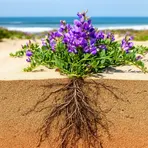
A wild plant with purple flowers that grows on sandy coasts and helps hold the sand
Surface Forms
Morphology
Lathyrus + japonicus
This is a scientific Latin binomial formed from the genus name Lathyrus (a pea genus) plus the specific epithet japonicus, which typically marks geographic origin. A learner who knows both constituents could infer it denotes a species of Lathyrus associated with Japan, but habitat details (seashores, dune-stabilizing roots) and full common-language meaning are specialized and not fully predictable from the parts.
Etymology
Lathyrus japonicus is a seaside 'wild pea'; Lathyrus names the pea group and japonicus links it to Japan. Picture its strong roots grabbing sand like little anchors and purple flowers in the wind, and you can see why it helps to 'stabilize sand dunes'.

