
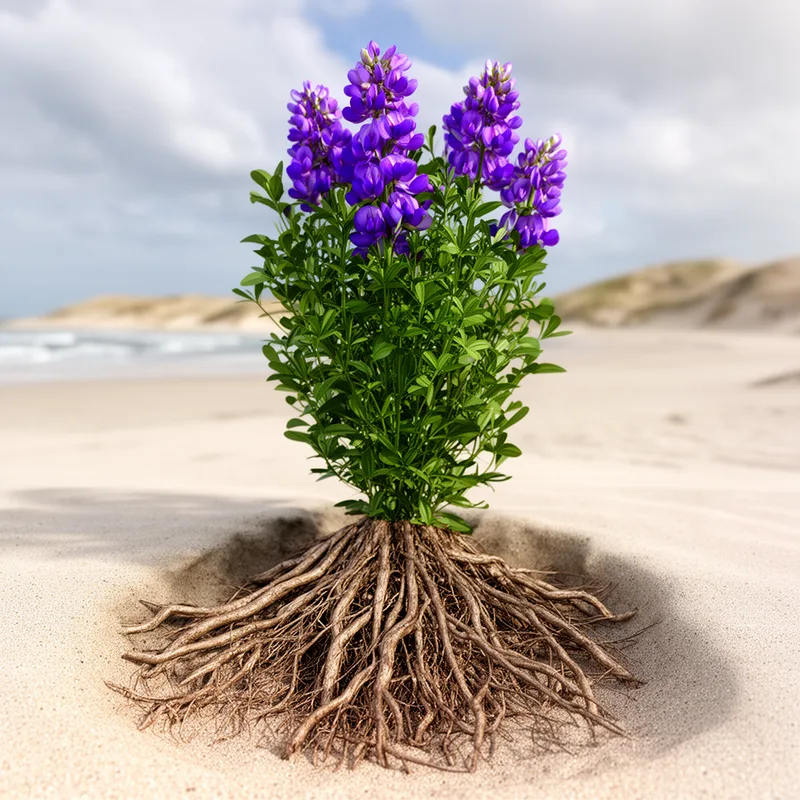
sea pea
- noun
- /si pɪ/
- Purple blooms of the sea pea add color to many northern shorelines during summer.
Examples
-
Researchers praise the sea pea for its ability to prevent soil erosion on sandy beaches.
-
The sea pea grows in abundance along the windswept dunes of the Atlantic coast.
-
Look at the sea pea!
-
The sea pea thrives along the coast.
-
Purple blooms of the sea pea add color to many northern shorelines during summer.
-
Researchers praise the sea pea for its ability to prevent soil erosion on sandy beaches.
-
The sea pea grows in abundance along the windswept dunes of the Atlantic coast.
Synonyms

A wild pea plant that grows on sandy seashores and holds sand with strong roots
A wild plant with purple flowers that grows on sandy coasts and helps hold the sand

A wild pea plant with purple flowers that grows on sandy seashores and helps keep sand in place
Surface Forms
Morphology
The meaning ('a pea that grows by the sea') is directly and compositionally derivable from combining 'sea' (habitat) + 'pea' (plant). This is a regular noun‑noun compound denoting an entity characterized by its location and involves no idiomatic or metaphorical shift, so a B1 learner who knows both words will readily infer the meaning.
Etymology
Sea pea is named for its small pea-like pods and for growing by the sea. Its strong roots hold the sand in place, so the name points to a wild pea that lives on the shore.

