
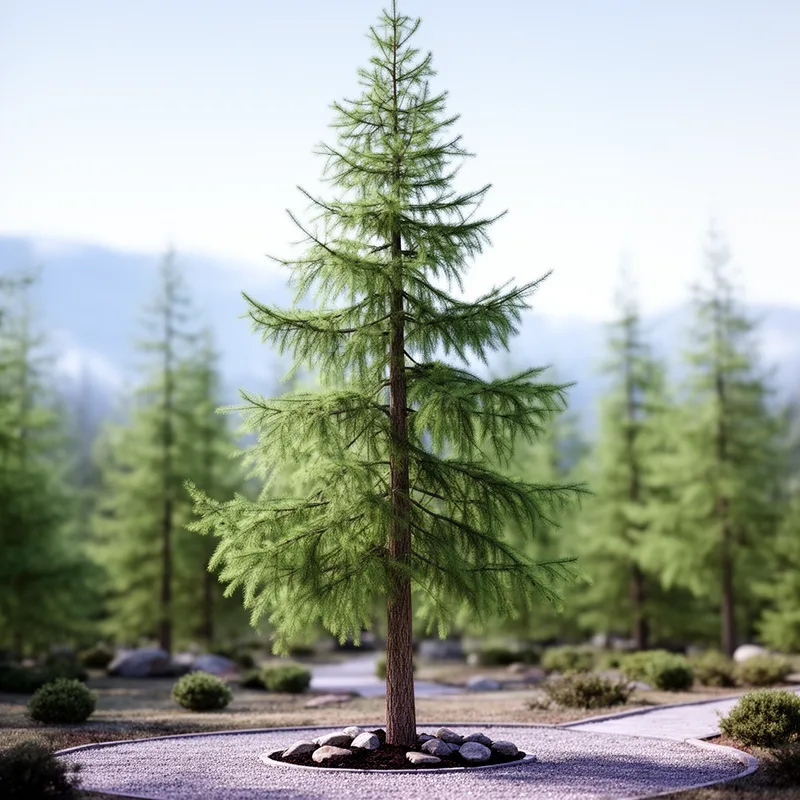
Larix siberica
- noun
- Specialized
- The Larix siberica is prized in landscaping for its distinctive foliage and resilience to cold climates.
Examples
-
Many forests in Siberia are dominated by the Larix siberica, adapting well to the harsh environment.
-
Botanists have studied the growth patterns of Larix siberica to understand its ecological importance.
-
The Larix siberica thrives in cold climates.
-
Many gardeners choose Larix siberica for its unique appearance.
-
Many forests in Siberia are dominated by the Larix siberica, adapting well to the harsh environment.
-
The Larix siberica is prized in landscaping for its distinctive foliage and resilience to cold climates.
-
Many gardeners choose Larix siberica for its unique appearance.
Synonyms

A medium-sized larch tree with soft bright-green needles and a narrow cone-shaped top native to Siberia
A medium-sized tree with soft bright-green needles that fall in autumn, used for its wood and in gardens
Surface Forms
Morphology
Larix + siberica
The name is a binomial scientific name composed transparently: 'Larix' identifies the larch genus and 'siberica' is a Latin adjectival form indicating origin (Siberia), so the compound simply denotes the Siberian larch. Scientific naming conventions (genus + origin/adjective) are regular and compositional, making the meaning derivable for learners who know the constituents (or can relate 'siberica' to 'Siberia').
Etymology
The name Larix siberica comes from Latin: Larix is the old word for the 'larch' tree and siberica means 'from Siberia'. So the name gives a simple picture of a larch tree from Siberia, which helps you remember it is the Siberian larch.

