
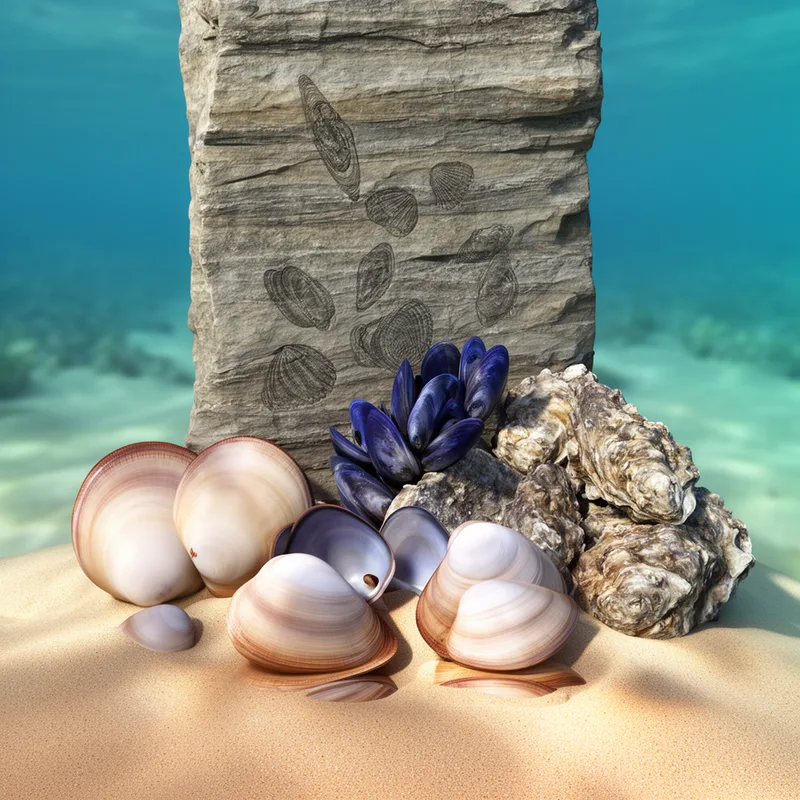
Lamellibranchia
- noun
- /ˌlæməˈbræŋkiə/
- Archaic
- The classification of Lamellibranchia has largely been replaced by the term Bivalvia in modern taxonomy.
Examples
-
Researchers studied the shell formation process in several species within Lamellibranchia.
-
The Lamellibranchia class includes many familiar shellfish.
-
The fossil record shows that Lamellibranchia appeared in the early Paleozoic era.
-
Many species of Lamellibranchia are found in marine environments.
-
Researchers studied the unique gill structures of various species within Lamellibranchia.
-
The classification of Lamellibranchia reflects the diversity of mollusks with two-part shells.
-
Many species of Lamellibranchia play important roles in their ecosystems as filter feeders.
Synonyms

A group of shellfish with two hinged shells like clams or oysters

Water animals with two shells joined by a hinge, like oysters or clams
Surface Forms
Etymology
Lamellibranchia comes from parts that mean 'small plate' and 'gills'. The lamella part (like in laminate) means 'small plate' and -branchia means 'gills', so the name points to animals whose gills are made of many thin plates, which is why it named clams, oysters and mussels.

