

Pelecypoda
- noun
- /ˌpɛlɪˈsɪpədə/
- Archaic
- The class Pelecypoda includes familiar shellfish such as oysters and clams.
Examples
-
Oysters are a type of Pelecypoda that filter water.
-
Many restaurants offer dishes made from Pelecypoda, like clam chowder and oyster stew.
-
A course in marine biology covers the diversity of Pelecypoda found in different habitats.
-
Scientists study the anatomy of Pelecypoda to understand mollusc evolution.
-
The Pelecypoda class includes many species of clams.
-
The class Pelecypoda includes various species such as scallops and mussels.
-
To learn more about marine life, students explored the habitats of Pelecypoda along the shore.
Synonyms
 2
6.3
2
6.3

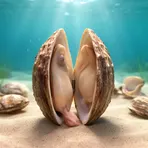
A water animal with a soft body inside two hinged shells, like a clam or oyster

A sea animal with a soft body inside two shells joined at one side, like a clam or oyster

Water animals with two shells joined by a hinge, like oysters or clams

An old scientific group name for sea animals like oysters and clams with two shells
Surface Forms
Etymology
Pelecypoda comes from Greek parts pelecy- meaning 'axe' and -poda meaning 'foot', because these animals have an axe-shaped 'foot' they use for digging. So, Pelecypoda names the bivalves like oysters, clams, scallops and mussels that live in two shells and use that strong foot, which explains the name.