
Kali
 9
8.3

- proper noun
- /ˈkɑːli/
- In Trinidad, the Indian deity Kali can merge with Shango, the Yoruba god of thunder, lightning, and associated elements.
- goddess Kali
- Kali Yuga
Loading YouTube…
Watch on YouTubeFor behold, Kali rises in the East.
- For behold, Kali rises in the East.
- And this is the beautiful opposites meeting in Kali.
Examples
-
I'm carving an idol of the goddess Kali.
-
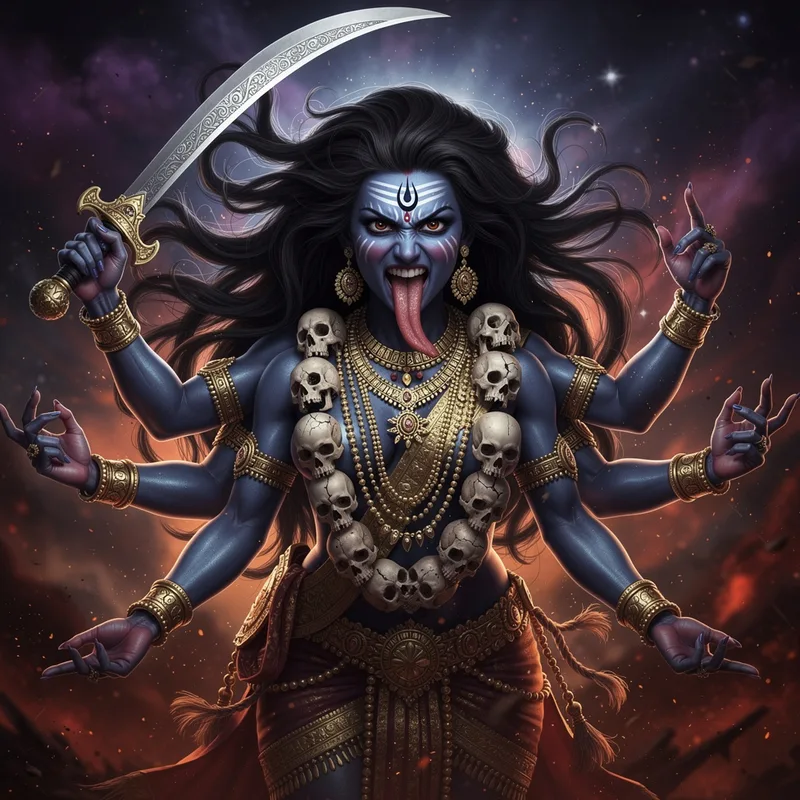
The heads represent the ego, which Kali helps her devotees to transcend.
-
The order was religious and worshipped Kali, the goddess of blood.
-
They worship Kali, the goddess of death.
-
Hindus have revered the goddess Kali for many centuries and in many ways throughout larger India.
Blog text (22) -
For example, the goddess Devi/Kali dances upon Shiva's body in order to activate Shiva's dormant male energy.
Academic text (2000) -
Many devotees visit the temple to honor Kali, the goddess associated with destruction and rebirth.
-
The priest performed a ritual to seek blessings from Kali, the fierce form of the goddess Devi.
-
In the festival, they celebrated Kali, the powerful goddess who embodies the cycle of life and death.
Compounds

- Specialized
A bushy plant that grows on sea beaches and salty marshes with prickly leaves

- Specialized
A prickly bushy plant like a round tumbleweed that grows in dry areas and damages crops
Surface Forms
Etymology
Kali comes from the Sanskrit word kāla, which means 'time' and also 'black'. That's why she is seen as the power of time and change, fierce in endings but able to bring new life.