
June 23
- noun
- According to a press release, the week-long program that ran from Monday, June 16, to Monday, June 23, was called
Examples
-
New York, NY, June 23, 2010 -- Despite having the most expensive health care system, the United States ranks last overall compared to six other industrialized countries -- Australia, Canada, Germany, the Netherlands, New Zealand, and the United Kingdom -- on measures of health system performance in five areas: quality, efficiency, access to care, equity, and the ability to lead long, healthy, productive lives, according to a new Commonwealth Fund report.
Blog text (23) -
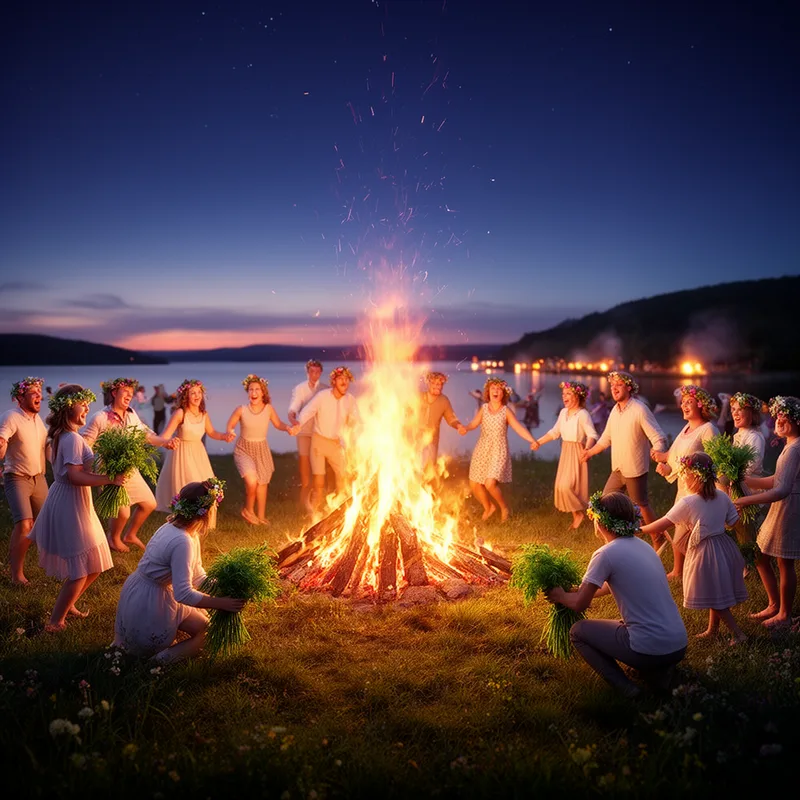
Many people gather to celebrate on June 23, marking Midsummer's Eve with festivities and bonfires.
-
Anthony Polis, Saturday, June 23, 2012.
Blog text (23) -
In Scandinavian countries, June 23 is often celebrated with traditional dances and feasts to welcome summer.
-
On June 23, families often enjoy outdoor celebrations that include music, food, and lighting bonfires.
Synonyms


 1
8.4
1
8.4
The evening before Midsummer Day when people celebrate with bonfires and dances
 1
6.8
1
6.8
A night around the longest day of the year when people celebrate with fires and dancing

The evening before Midsummer Day when people light bonfires and celebrate

The night before Midsummer Day that people in some countries celebrate with bonfires and songs
Surface Forms
Morphology
The form 'June 23' is fully compositional as month + day so a B1 learner who knows 'June' and '23' will understand it denotes a calendar date. However, the additional culturally specific meaning ('the night before Midsummer Day' and associated celebrations) is not derivable from the constituents and requires extra cultural knowledge. Because the basic date meaning is transparent but the festival connotation is not, this is best classified as semi-transparent.
Etymology
June 23 used to be the 'night before' 'Midsummer Day'. People lit big bonfires, picked special herbs, and stayed up to see the sunrise. That's why June 23 often means a night of traditional celebration.