
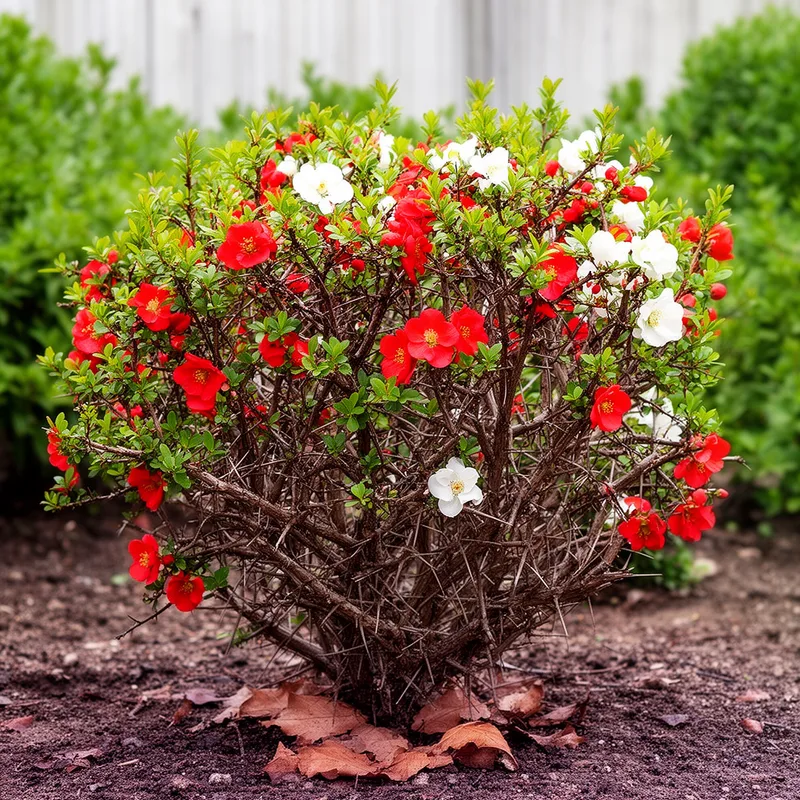
Japanese quince
- noun
- The Japanese quince blooms early in spring with vibrant red flowers.
Examples
-
Many gardeners plant Japanese quince for its attractive blossoms and thorny branches.
-
The fruit of the Japanese quince is sometimes used to make jelly.
-
The Japanese quince blooms beautifully in spring.
-
I planted a Japanese quince in my garden last year.
-
Many gardeners plant Japanese quince for its attractive blossoms and thorny branches.
-
The Japanese quince blooms early in spring with vibrant red flowers.
-
I planted a Japanese quince in my garden last year to enjoy its beautiful blooms.
Synonyms
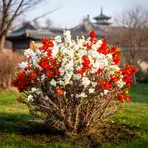
A thorny bush from China that makes red or white flowers in spring
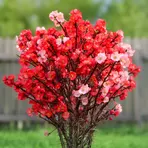
A small Asian shrub with spiny branches and red or pink flowers

A thorny shrub from Japan with red spring flowers
Surface Forms
Morphology
The meaning is directly compositional: 'Japanese' specifies an association/origin and 'quince' names the tree/fruit, so the phrase denotes a variety or type of quince related to Japan. This adjective+noun naming pattern is cross-linguistically common, so a B1 learner who knows both constituents would readily infer the MWE's meaning.
Etymology
Japanese quince may come from people first seeing the shrub in Japanese gardens and so linking the plant with Japan. Its thorny branches and bright red or white flowers give a clear picture, so the name now means a small, showy shrub used as a 'garden plant'.

