
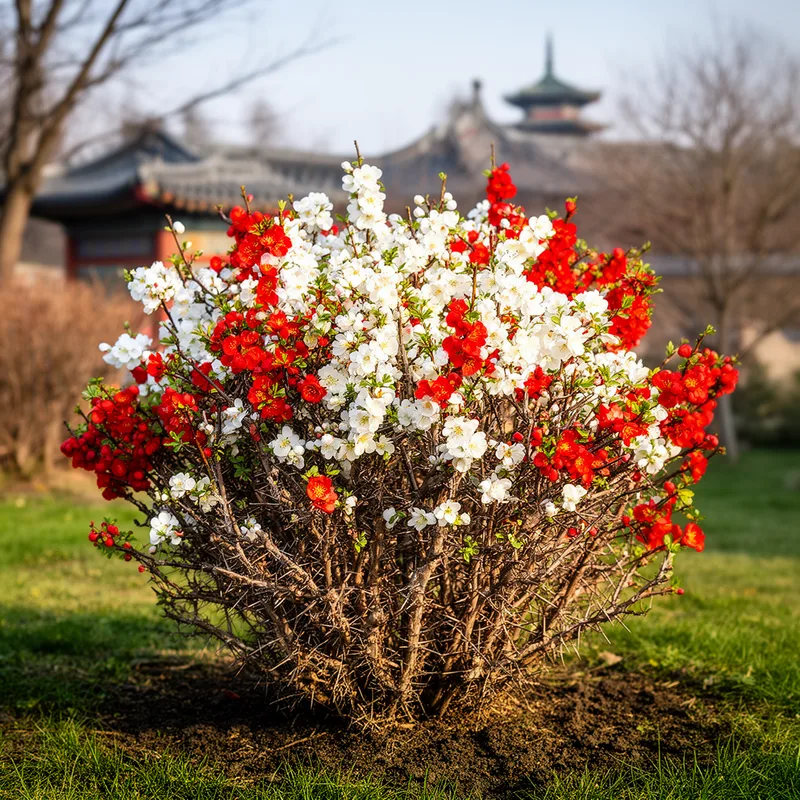
Chaenomeles speciosa
- noun
- Specialized
- The Chaenomeles speciosa in our garden blooms with vibrant red flowers each spring.
Examples
-
Many gardeners value Chaenomeles speciosa for its early blossoms and thorny branches, which make it an effective hedge.
-
The Chaenomeles speciosa, known for its beautiful red flowers, attracts many pollinators in the spring.
-
Botanists collected samples of Chaenomeles speciosa from several regions in China for research.
-
The Chaenomeles speciosa blooms beautifully in spring.
-
Have you seen the Chaenomeles speciosa at the botanical garden?
-
Gardeners often choose Chaenomeles speciosa for its striking blossoms and ability to thrive in various climates.
-
In early spring, the Chaenomeles speciosa showcases stunning white blossoms before its leaves fully emerge.
Synonyms
A small Asian shrub with spiny branches and red or pink flowers

A bush from China that loses its leaves, has thorns and red or white flowers
Surface Forms
Morphology
Chaenomeles + speciosa
This is a Linnaean binomial: genus Chaenomeles (a shrub) + the species epithet speciosa. If a learner knows both constituents and recognises Latin species epithets (speciosa ≈ 'showy'/'beautiful'), they can infer it denotes a particular, showy species of Chaenomeles, but the epithet is not English and the term is specialised, so the meaning is only partly predictable to an average B1 learner.
Etymology
Chaenomeles speciosa may come from Greek and Latin words: Chaenomeles meaning 'open apple' and speciosa meaning 'showy'. The name paints a picture of a thorny shrub with bright, apple-like flowers that open early in spring, and that's why gardeners call it the 'flowering quince'.

