

Jaghatai language
- noun
- Literature
- Scholars still study texts produced in the Jaghatai language to understand Central Asian history.
Examples
-
The Jaghatai language was influential in the development of several modern Turkic languages.
-
The Jaghatai language was widely used in Central Asia.
-
Many classical Uzbek poems were originally written in Jaghatai language.
-
Many historical texts are written in Jaghatai language.
-
Many classical Uzbek poems were originally written in Jaghatai language.
-
Scholars still study texts produced in the Jaghatai language to understand Central Asian history.
-
The Jaghatai language was influential in the development of several modern Turkic languages.
Synonyms

A Turkic written language from Central Asia in the Middle Ages, named after Chagatai, a son of Genghis Khan

A written language used for books and poems in medieval Central Asia
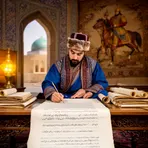
A written Central Asian language from the middle ages, named after a son of Genghis Khan
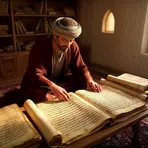
A written Turkic language used in Central Asia long ago

A Turkic written language used across Central Asia from the 1400s to the early 1900s

A medieval written Turkic language from Central Asia used in regions once ruled by a son of Genghis Khan

A Turkic literary language people used for books and poems in Central Asia in the Middle Ages
Surface Forms
Morphology
The phrase is fully compositional: 'Jaghatai' names a specific Turkic literary variety and 'language' denotes a named speech/writing system, so together they straightforwardly denote the language called Jaghatai. This follows the common 'X language' naming pattern found cross-linguistically, so a B1 learner who knows both constituents would readily understand the meaning.
Etymology
Jaghatai language is named after Jaghatai, a son of Genghis Khan, because his court and writers used this Turkic language for poems and official records. So the name now means the medieval 'literary language' of Central Asia.

