
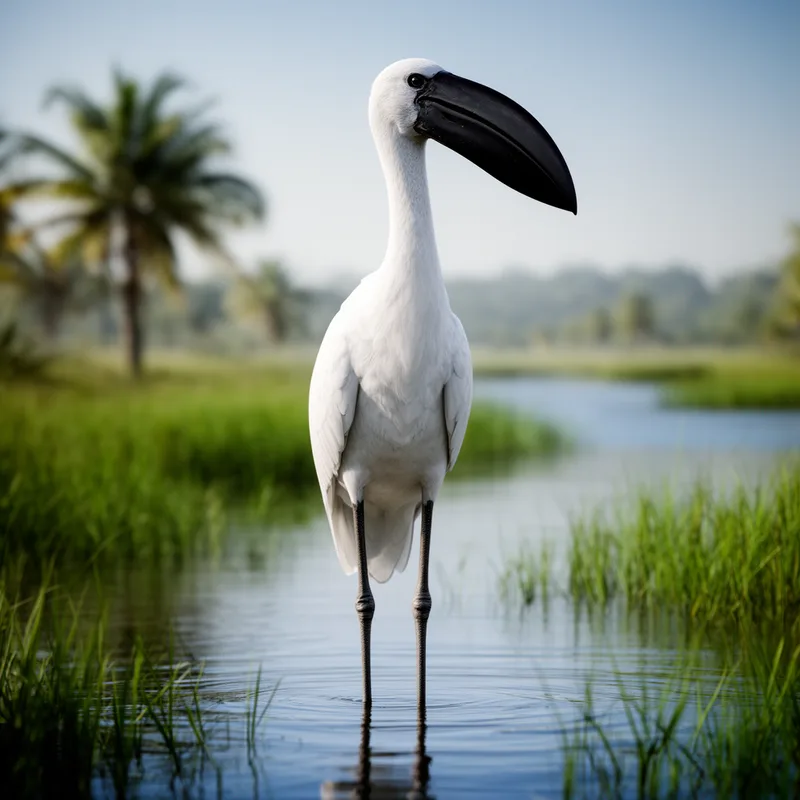
Jabiru mycteria
- noun
- Specialized
- With its bright white plumage and huge black bill, the Jabiru mycteria stands out among other wetland birds.
Examples
-
The Jabiru mycteria is often seen wading majestically along South American waterways.
-
Birdwatchers travel to the Pantanal to catch a glimpse of the impressive Jabiru mycteria.
-
The Jabiru mycteria is often seen wading in shallow waters.
-
Have you ever spotted a Jabiru mycteria in the wild?
-
Birdwatchers travel to the Pantanal to catch a glimpse of the impressive Jabiru mycteria.
-
The Jabiru mycteria is often seen wading majestically along South American waterways.
-
With its bright white plumage and huge black bill, the Jabiru mycteria stands out among other wetland birds.
Synonyms
A large white stork with a black head and neck found in the Americas and northern Australia
How Big
- Specialized

- South African
 27
2.3
27
2.3
 11
2.0
1
3.6
11
2.0
1
3.6
Surface Forms
Morphology
Both constituents explicitly refer to storks—'jabiru' (a tall white stork) and 'Mycteria' (a genus of storks)—so a learner who knows those words can infer this is the name of a particular stork species. The phrase is taxonomic and compositional rather than idiomatic, so its meaning is directly derivable from the parts.
Etymology
Jabiru mycteria probably comes from a local South American word, with Jabiru meaning 'swollen neck' and the second part mycteria naming stork-like birds. That's why the name points to the bird's big black bill and tall white neck today.