
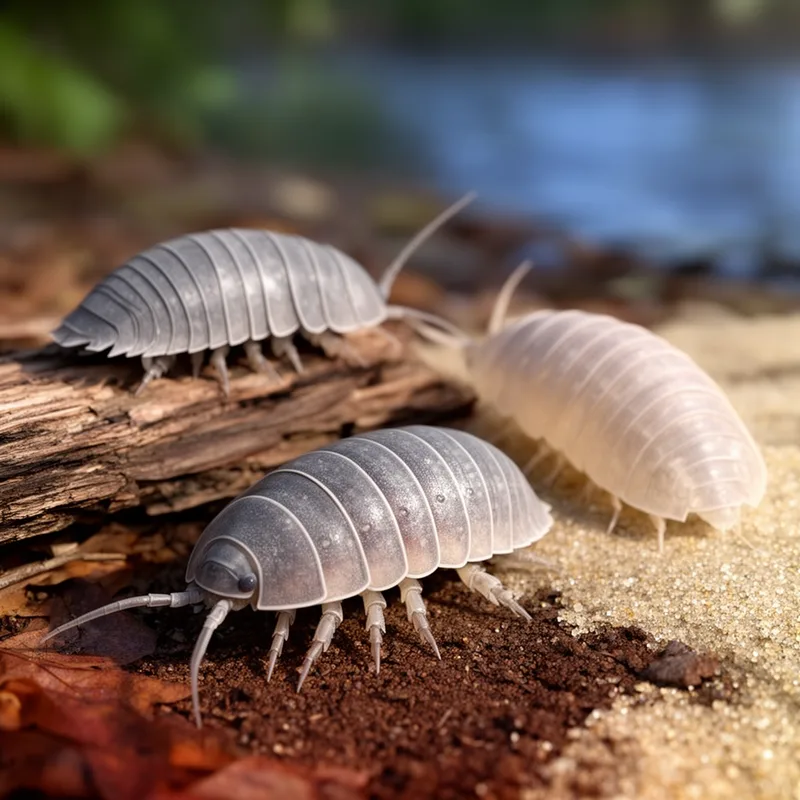
Isopoda
- noun
- /ˈaɪsəˌpoʊdə/
- Specialized
 :
isópodos
:
isópodos
- Scientists have discovered a new species within the Isopoda order living in the deep ocean.
Examples
-
Members of the Isopoda are found in both marine and terrestrial environments worldwide.
-
The Isopoda are fascinating creatures found in various environments.
-
The biology class studied the external anatomy of Isopoda using woodlice as examples.
-
Many species of Isopoda can be found under decaying wood.
-
The woodlice belong to the order Isopoda, which is known for its flattened bodies and multiple legs.
-
In the garden, I often find Isopoda, commonly known as pill bugs, hiding under stones.
-
The order Isopoda includes various species that thrive in moist environments, such as soil and decaying wood.
Synonyms
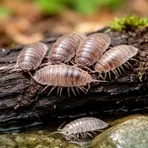
A group of animals like woodlice with flat bodies and seven pairs of legs
Compounds
- Specialized
A group of animals like woodlice with flat bodies and seven pairs of legs
Surface Forms
Morphology
Isopoda = isopod (semi-transparent) = iso + pod + a
The word is formed from scientific combining forms (iso- + -pod) and the taxonomic ending -a; the internal structure is regular for scientific names but not obvious to average learners unfamiliar with technical morphology.
Etymology
Isopoda comes from the Greek parts iso- 'equal' and -poda 'foot', and the pod part is the same as in tripod. So, Isopoda means 'equal feet', which helps you remember these animals because they have many similar pairs of legs.

