
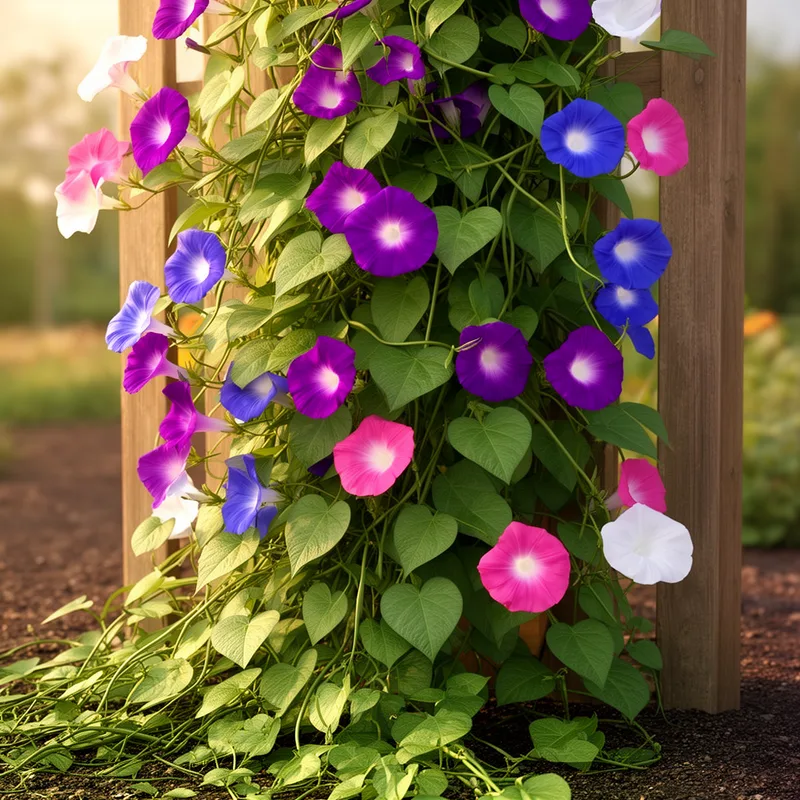
Ipomoea
- noun
- /ˌaɪpəˈmiːə/
- Specialized
- Several species of Ipomoea are grown for their colorful, trumpet-shaped flowers.
Examples
-
Botanists discovered a new variety of Ipomoea in the tropical forest.
-
Many gardeners love to grow Ipomoeas in their backyards.
-
The invasive Ipomoea quickly covered the garden fence during the summer.
-
The Ipomoea plant blooms beautifully in spring.
-
The garden was filled with vibrant Ipomoea flowers that attracted numerous butterflies.
-
She admired the beautiful Ipomoea growing on the trellis, its large blooms shining in the sun.
-
In spring, the Ipomoea vine produced stunning, funnel-shaped flowers that decorated the patio.
Compounds

- Specialized
A tropical climbing plant with large white fragrant flowers that open at night

- Specialized
A tropical plant with a large sweet orange root called the sweet potato that people eat

- Specialized
A tropical plant that grows along the ground or climbs and has a large starchy root used as food


- Specialized
A wild morning glory plant from the western United States with long roots and bright purple flowers
- Specialized
An annual climbing plant with bright, ruffled flowers often grown in gardens

- Specialized
A fast-growing climbing plant with funnel-shaped flowers in purple, blue, pink, or white
- Specialized
A climbing plant with thin feathery leaves and bright red tube-shaped flowers that attract hummingbirds


- Specialized
A tropical morning glory plant with bright pink funnel-shaped flowers

- Specialized
A tropical climbing plant with a very large starchy root used as food

- Specialized
A spreading plant with purple flowers that grows on sandy beaches

Surface Forms
Etymology
Ipomoea comes from old Greek words meaning 'worm' and 'like'. This makes a simple picture: the plants have long, twining stems that coil like a worm, so the name fits these climbing, trumpet-shaped morning-glory flowers.

