
Ipomoea pes-caprae
- noun
- Specialized
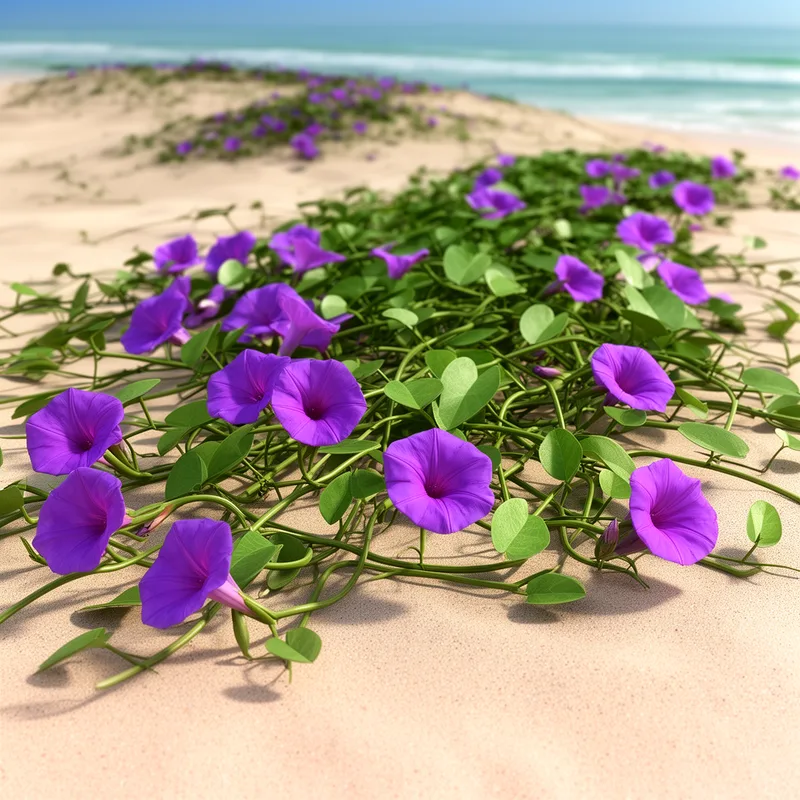
- The leaves of Ipomoea pes-caprae are shaped like goat’s feet and help stabilize sandy shores.
Examples
-
Conservationists planted Ipomoea pes-caprae along the dunes to prevent erosion.
-
Ipomoea pes-caprae is often seen blooming with purple flowers on coastal beaches.
-
The Ipomoea pes-caprae thrives in sandy coastal areas.
-
Many tourists enjoy the beauty of Ipomoea pes-caprae along the beach.
-
Ipomoea pes-caprae grows in large patches on sandy beaches, providing important habitat for coastal wildlife.
-
Conservationists often use Ipomoea pes-caprae to stabilize coastal dunes due to its sprawling growth habit.
-
You can identify Ipomoea pes-caprae by its distinctive purple flowers and heart-shaped leaves along the shoreline.
Synonyms

A low plant with long stems and large flowers that grows on sandy beaches

A low plant with long spreading stems and bright purple flowers that grows on coastal sand dunes
Surface Forms
Morphology
Ipomoea + pes-caprae
This is a Latin scientific binomial (a proper taxonomic name), not a normal compositional English phrase; the species epithet 'pes-caprae' is not an English word here and the label primarily identifies a specific plant rather than describing it in everyday language. Even if a learner could gloss the elements (e.g., if they somehow knew Latin 'pes caprae' = 'goat's foot'), that would not reliably convey the plant's everyday meaning 'beach morning glory' or its coastal, sprawling habit, so the overall meaning is not derivable by a B1 learner from the constituents.
Etymology
Ipomoea pes-caprae comes from Latin words pes meaning 'foot' and caprae meaning 'goat'. Its wide, flat leaves look like a goat's foot and the plant grows on sandy beaches, so the name gives a simple picture of the plant's shape and home.

