

Insecta


 1
6.7
- noun
- /ɪnˈsɛk.tə/
- Specialized
- It's this kind of simplicity... that governs the phylum Insecta.
Examples
-
Insects are categorized under Insecta, which is a major class within the phylum Arthropoda.
-
North America, by contrast, has approximately 12% of the world's Insecta in all the same taxa, even the parthenogenetic ones.
Academic text (1996) -
However, caution in drawing firm conclusions is advised because full biological inventories of the Insecta of the two regions have not yet been rendered.
Academic text (1996) -
Insecta Hemiptera, of the suborder Auchenorrhyncha!
-
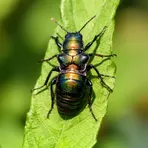
The class of animals known as Insecta includes creatures such as ants, bees, and butterflies, all of which have six legs.
-
Many species of Insecta are vital for pollination, making them essential for the health of various ecosystems.
Synonyms

Surface Forms
Etymology
Insecta comes from Latin parts in- ('into') and sect ('to cut'), the same root you see in section. It means 'cut into', which helps you remember that insects have bodies made of three main parts.