

India-rubber tree
- noun
- /ˈɪndiə ˈrʌbər tri/
- Archaic
- Latex extracted from the India-rubber tree was once an important source of natural rubber.
Examples
-
The India-rubber tree is a popular houseplant known for its glossy leaves and resilience.
-
They kept their India-rubber tree near the window so it could get plenty of sunlight.
-
The India-rubber tree is popular among houseplant enthusiasts.
-
Many people enjoy the beauty of the India-rubber tree indoors.
-
Latex extracted from the India-rubber tree is a vital resource for producing natural rubber.
-
The India-rubber tree thrives indoors and is admired for its lush green leaves.
-
In many homes, the India-rubber tree serves as a beautiful and low-maintenance houseplant.
Synonyms

 1
3.1
1
3.1

Large tropical tree often kept indoors as a houseplant that can make natural rubber

A tropical tree often kept indoors as a houseplant with large shiny leaves
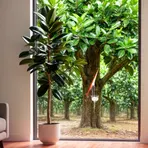
Large tropical Asian tree with shiny thick leaves often grown indoors and sometimes used to make rubber

A large tropical Asian tree that makes a milky sap used to make things like tyres
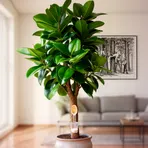
A big tropical tree with large shiny leaves grown indoors and once used to make rubber
How Big

Surface Forms
Morphology
India-rubber + tree
The phrase is compositionally built: 'India-rubber' specifies the material/source (natural rubber) and 'tree' names the plant, so a learner who knows 'India', 'rubber' and 'tree' can infer it is a tree that yields India-rubber. The 'material + tree' compound pattern is common and follows normal English noun compounding, making the meaning directly derivable.
Etymology
The name India-rubber tree comes from a simple picture: the tree gives a milky sap that people made into rubber, and that rubber reached Europe from parts of Asia long called 'India'. That's why the name points to a plant used as a source of natural rubber today.