

rubber plant
 1
3.1
1
3.1

- noun
- /ˈrʌbər plænt/
- I decided to buy a rubber plant because it is easy to care for indoors.
Examples
-
Nothing but a rubber plant would fit in with the Ferncliffes.
-
The room grew clear and sharp, the beveled glass, the dark-green rubber plant, the woman's small but penetrating eyes.
Fiction book (1998) -
Tracking just ahead of Milo, we get to a screen that shows a workstation with a red pennant on the wall and a rubber plant at each end of a desk.
Fiction book (2001) -
The rubber plant in the corner adds a touch of greenery to the room.
-
The living room feels fresher with the large rubber plant near the window.
Synonyms

A large Asian tree with shiny leaves often grown indoors as a houseplant

A tropical tree often kept indoors as a houseplant with large shiny leaves
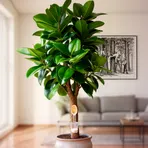
A big tropical tree with large shiny leaves grown indoors and once used to make rubber
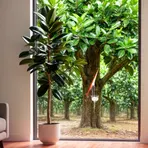
Large tropical Asian tree with shiny thick leaves often grown indoors and sometimes used to make rubber

A large tropical Asian tree that makes a milky sap used to make things like tyres
Surface Forms
Morphology
The noun–noun compound 'rubber plant' is compositional: 'rubber' (the material or source of latex) modifies 'plant' to indicate a plant associated with rubber. This is a common and predictable formation, so a B1 learner who knows both constituents (and contextual cues like buying one for a living room) can infer the intended meaning.
Etymology
The plant rubber plant gets its name from the tree's milky sap, which people used to make rubber. Because the tall tropical plant is often kept indoors as a 'houseplant', the name now refers to this decorative tree that can also be a 'source of natural rubber'.