
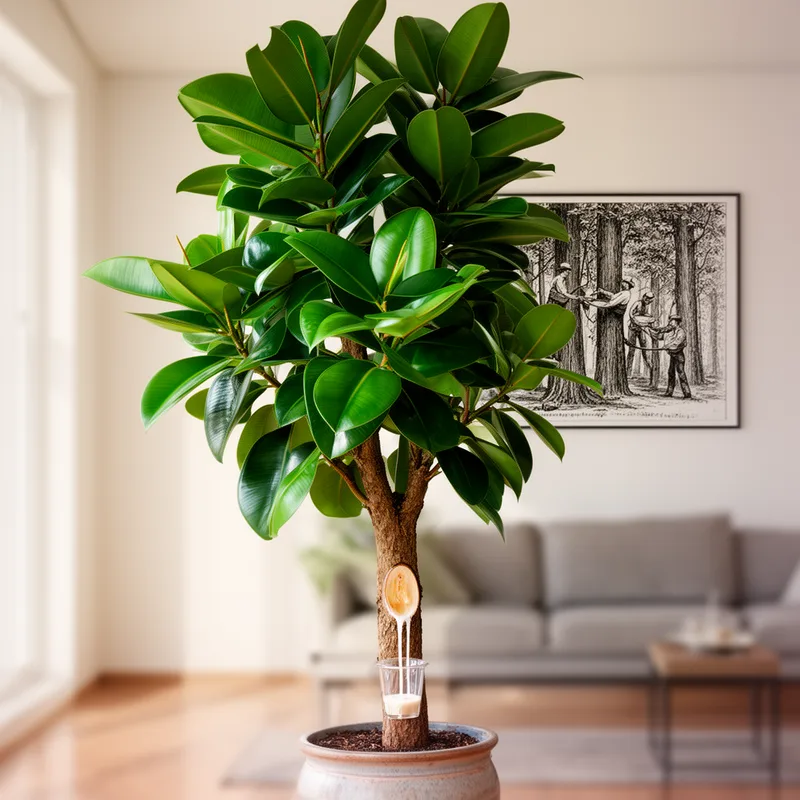
India-rubber fig
- noun
- /ˈɪndiəˌrʌbər fɪg/
- Archaic
- The India-rubber fig makes a striking addition to any living room with its glossy leaves.
Examples
-
In the nineteenth century, the India-rubber fig was widely harvested for its latex.
-
Even when grown indoors, the India-rubber fig can reach an impressive height if properly cared for.
-
The India-rubber fig is a popular houseplant.
-
I bought an India-rubber fig for my living room.
-
The India-rubber fig is a popular choice among indoor gardeners due to its lush leaves.
-
People often select the India-rubber fig for their homes because it thrives in low light conditions.
-
To brighten up your space, consider adding an India-rubber fig to your living room decor.
Synonyms

 1
3.1
1
3.1

Large tropical tree often kept indoors as a houseplant that can make natural rubber

A large Asian tree with shiny leaves often grown indoors as a houseplant

A tropical tree often kept indoors as a houseplant with large shiny leaves

A large tropical Asian tree that makes a milky sap used to make things like tyres

Large tropical Asian tree with shiny thick leaves often grown indoors and sometimes used to make rubber
Surface Forms
Morphology
India-rubber + fig
This is a compositional botanical name: 'India-rubber' signals a rubber-producing association and 'fig' names a kind of tree, so a learner who knows those constituents can infer it is a fig/tree associated with India-rubber (i.e., a rubber-producing houseplant). Such compound plant names are cross-linguistically common and follow transparent noun-modifier composition, making the meaning predictable to B1 learners.
Etymology
India-rubber fig was named because this kind of fig tree produces a sticky white sap that people once used to make 'rubber'. So the name links the tree itself and its old use for 'rubber', which explains why it was harvested in the past and is now a common houseplant.