

Hypodermatidae
- noun
- /ˌhaɪpəˈdɜrmətɪˌdeɪ/
- Specialized
- Cattle farmers often have to deal with infestations caused by Hypodermatidae larvae under the animals' skin.
Examples
-
The life cycle of Hypodermatidae involves the larvae migrating through the host's tissues.
-
Veterinarians are trained to recognize the symptoms of Hypodermatidae infections in livestock.
-
The Hypodermatidae family includes several species of warble flies.
-
Farmers often worry about Hypodermatidae infesting their cattle.
-
Cattle farmers often have to deal with infestations caused by Hypodermatidae larvae under the animals' skin.
-
Veterinarians are trained to recognize the symptoms of Hypodermatidae infections in livestock.
-
The life cycle of Hypodermatidae involves the larvae migrating through the host's tissues.
Synonyms
 1
9.9
1
9.9

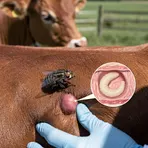
A large hairy fly whose larvae grow under the skin of mammals and cause pain

A group of flies whose young live inside animals such as cows and horses and harm them
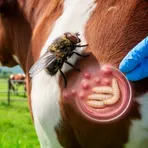
Large flies whose young live inside animals like cows and horses and cause harm

A hairy fly like a bee whose young insects make lumps under the skin of cows
Surface Forms
Morphology
Hypodermatidae = Hypoderma (opaque) = hypo + dermat + idae
The family name is built on the taxonomic genus Hypoderma plus the zoological family suffix -idae, but this classical naming convention is not transparently recoverable for most learners.
Etymology
Hypodermatidae comes from Greek parts: hypo- 'under', derma 'skin', and the family ending -idae, and you can see the same 'under the skin' idea in hypodermic. These are flies whose young live and make lumps under animals' skin, so the name points to 'under the skin'.