
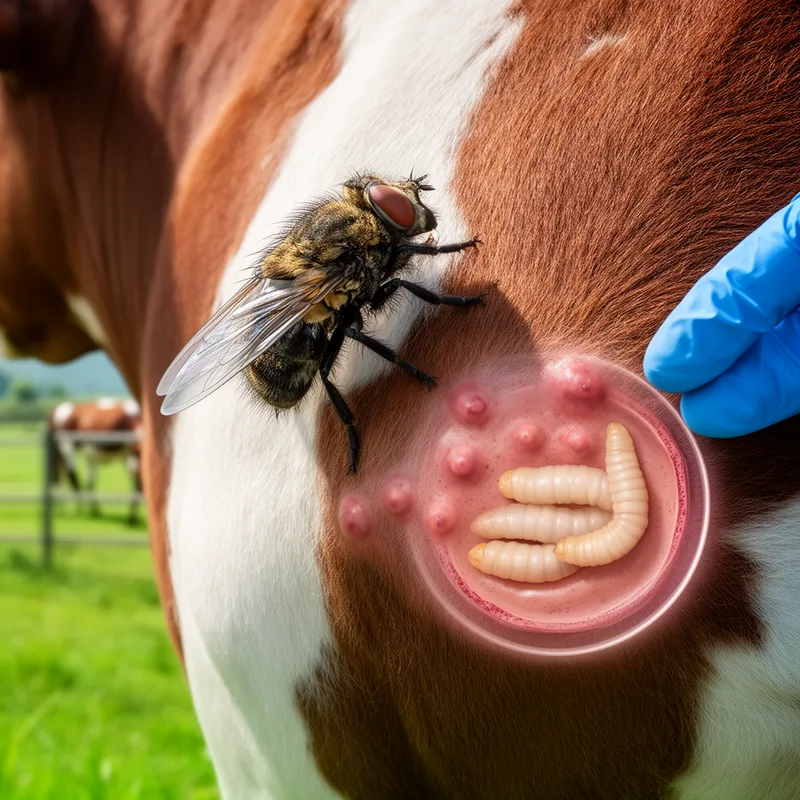
family Oestridae
- noun
- /ˈfæmɪli ˈoʊstrɪdi/
- Specialized
- The family Oestridae includes several species whose larvae live under the skin of mammals.
Examples
-
Veterinarians often encounter infestations caused by members of the family Oestridae in livestock.
-
The family Oestridae consists of large flies that lay their eggs on the skin of mammals, leading to larvae developing inside.
-
Research on the family Oestridae has helped improve treatments for parasitic fly infections in animals.
-
The family Oestridae includes various species of warble flies.
-
Many mammals are affected by the family Oestridae larvae.
-
Studies on the family Oestridae have revealed important information about their reproductive habits as internal parasites.
-
Farmers must be aware of the challenges posed by the family Oestridae, as their larvae can cause significant health issues in cattle.
Synonyms

A group of flies whose young live inside animals such as cows and horses and harm them
A group of large flies whose young live under the skin of animals like cows and make lumps
Surface Forms
Morphology
This is a literal taxonomic noun phrase: combining 'family' (a scientific grouping) with the taxon name 'Oestridae' yields the straightforward meaning 'the taxonomic family called Oestridae (a group of flies)'. The compositional pattern (family + taxon name) is standard in scientific naming and cross-linguistically familiar, so a B1 learner who knows both constituents would understand it.
Etymology
Family Oestridae may come from an old word for flies that trouble animals. These flies lay eggs and their larvae, young maggots, live under the skin of mammals and make lumps called warbles, so the name now brings to mind 'parasitic flies'.

