
Hydrochoerus
- noun
- /ˌhaɪdrəˈkoʊərəs/
- Specialized
- Fossil records indicate that Hydrochoerus once ranged farther than its present distribution.
Examples
-
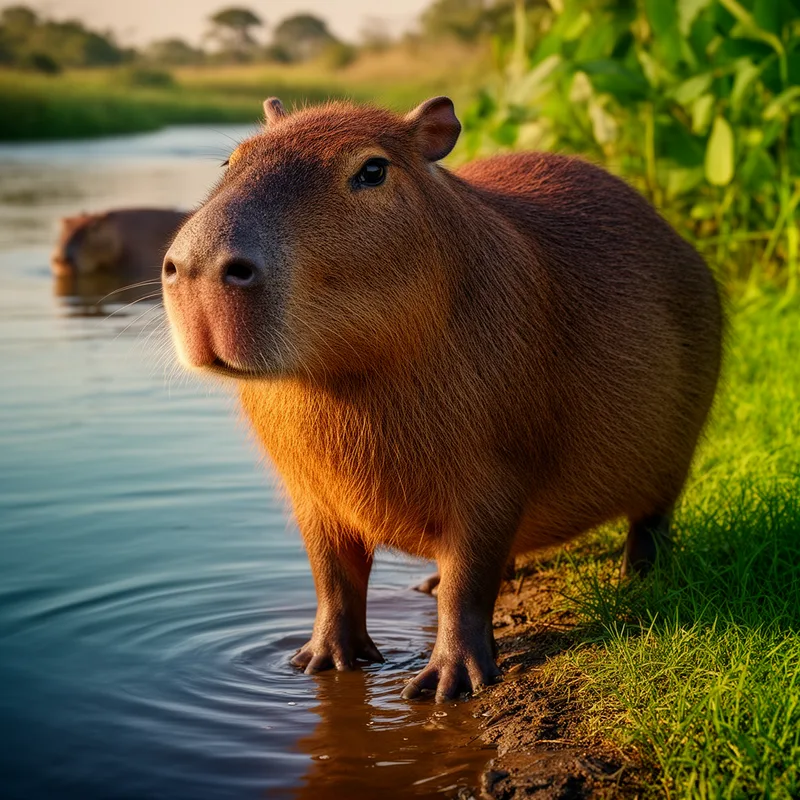
Look at that Hydrochoerus grazing by the river!
-
The Hydrochoerus genus includes the well-known capybara, the world's largest rodent.
-
Scientists studied the habitat preferences of Hydrochoerus species along the riverbanks.
-
The Hydrochoerus is the largest rodent in the world.
-
The Hydrochoerus is known for its sociable nature, often seen in groups near water sources.
-
Among the largest rodents, the Hydrochoerus can weigh up to 140 pounds and is often found in wetlands.
-
The Hydrochoerus, commonly called the capybara, is often seen lounging by riverbanks in its natural habitat.
Compounds

- Specialized
A large South American animal like a giant guinea pig with partly webbed feet that lives near water
Surface Forms
Morphology
Hydrochoerus = hydro + choerus
Although historically built from a Greek combining form meaning 'water' and a second element meaning 'pig', the full scientific genus name is not transparently recoverable from ordinary English vocabulary.
Etymology
Hydrochoerus comes from Greek parts hydro- meaning 'water' and choerus meaning 'pig', so it literally means 'water pig'. That helps explain the name for the capybara, the very large rodent in this group that often lives near rivers and lakes.

