

Hydrobates pelagicus
- noun
- Specialized
- The Hydrobates pelagicus is often seen gliding low over the waves during rough weather.
Examples
-
Researchers tracked the migration routes of the elusive Hydrobates pelagicus to study its feeding habits.
-
During their breeding season, Hydrobates pelagicus nests in crevices along remote sea cliffs.
-
Look at that Hydrobates pelagicus!
-
The Hydrobates pelagicus is a small bird.
-
During their breeding season, Hydrobates pelagicus nests in crevices along remote sea cliffs.
-
Researchers tracked the migration routes of the elusive Hydrobates pelagicus to study its feeding habits.
-
The Hydrobates pelagicus is often seen gliding low over the waves during rough weather.
Synonyms
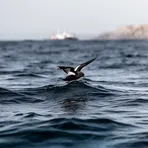
A small black bird with white marks that lives in northern seas like the Atlantic and Mediterranean

A small dark seabird with white marks that flies low over the sea in storms
Surface Forms
Morphology
Hydrobates + pelagicus
This is a Linnaean (Latin) binomial name rather than a regular English phrasal expression; the parts are taxonomic labels, not compositional English words with predictable combined meaning. A B1 learner who 'knows' the listed constituents still would not derive the species-specific sense ('small sooty-black storm petrel') from them because 'pelagicus' is non‑English/unknown and scientific names function as arbitrary labels across languages.
Etymology
Hydrobates pelagicus comes from old Greek and Latin words: hydro- meaning 'water', -bates meaning 'walker', and pelagicus meaning 'of the sea'. The name may come from the bird's habit of flying very low and seeming to 'walk' or dance on the wave tops, so it fits a small sea bird often seen close to the water.

