
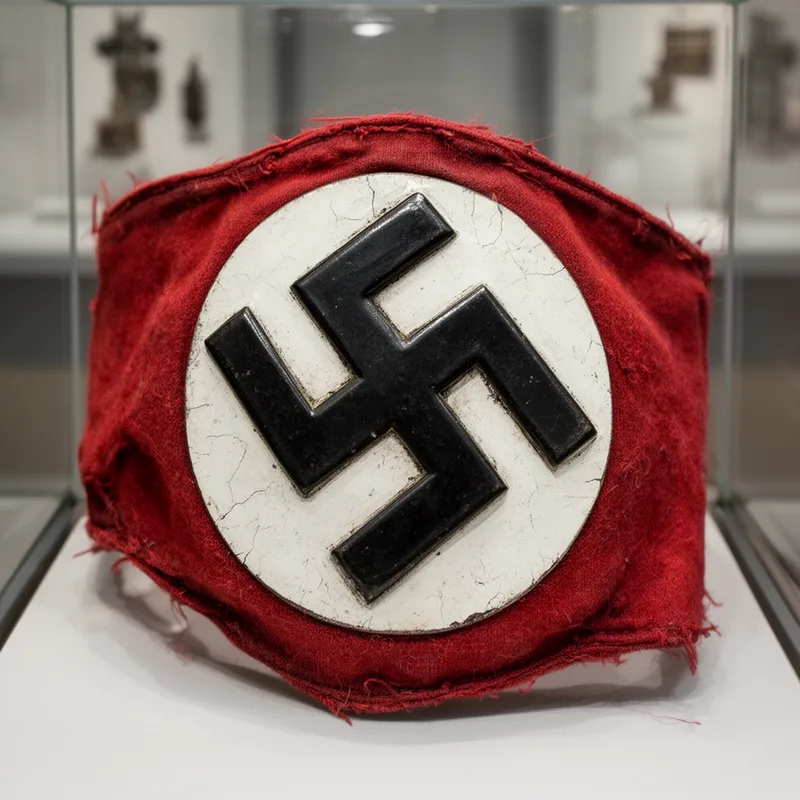
Hakenkreuz


 1
9.9
- noun
- /ˈhɑːkənˌkɔɪts/
- Offensive
- Many historians study the Hakenkreuz to understand its historical significance in World War II.
Examples
-
He rips the elaborate Hakenkreuz, the swastika, from his lapel and holds it out to Stern pathetically. #SCHINDLER#
Fiction book (1993) -
We said "Hakenkreuz."
-
I saw Hakenkreuz swastikas and Reichskriegsflaggen German Army flags fluttering over the assembly.
Academic text (2008) -
And an elaborate gold-on-black enamel Hakenkreuz (or swastika) which the gentleman pins to the lapel of his elegant dinner jacket.
Fiction book (1993) -
The Hakenkreuz was displayed prominently during the Nazi rally in the town square.
-
The use of the Hakenkreuz as an emblem deeply offends many people because of its association with hate.
Synonyms
 31
9.9
A symbol used by the Nazi Party showing a cross with bent arms
Surface Forms
Etymology
Hakenkreuz comes from the German parts Haken ('hook') and Kreuz ('cross'), so it literally means 'hooked cross'. Because the design looks like a cross with hooked arms, it became the symbol of the Nazi Party and today is an infamous symbol of hate.