
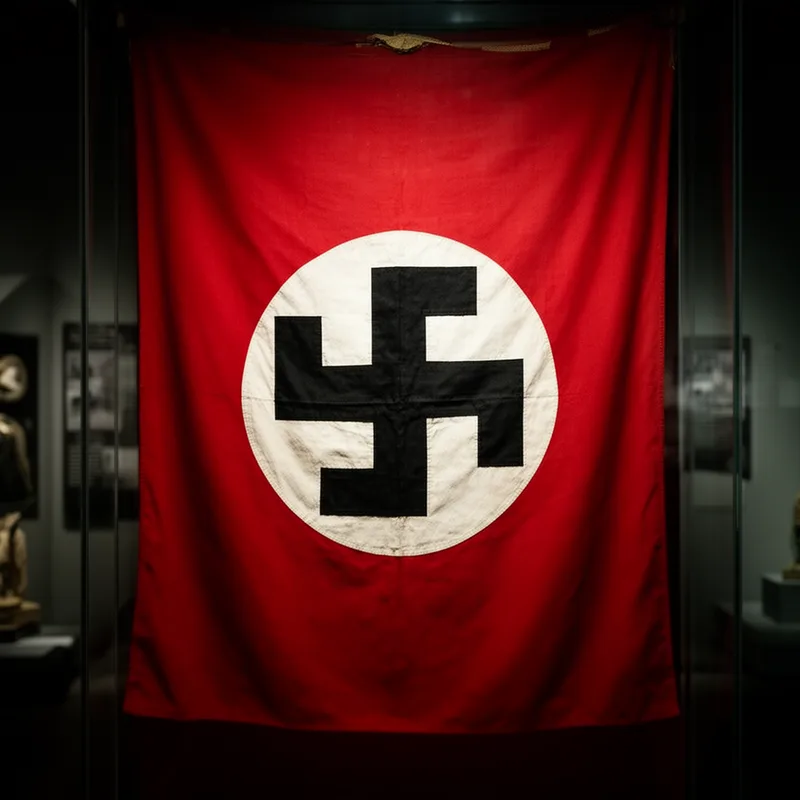
swastika
 31
9.9

- noun
- /ˈswɑːstɪkə/
- Offensive
- We need to pull together under the sign of the swastika.
Loading YouTube…
Watch on YouTubeAnd during Biden's administration, I have filmed neo Nazis waving swastikas with guns outside of drag events.
- And during Biden's administration, I have filmed neo Nazis waving swastikas with guns outside of drag events.
- These were guys who as soon as I walked in, they've got swastikas, lightning bolts, s s stuff.
- People had just seen that on pamphlets, you know, had seen had seen the swastikas on pamphlets and stuff.
- I think it's so corrupted that I now equate it to a swastika.
- Having other people who left hate groups struggling because they have a swastika on their chest and they can't go to the beach.
- Carve punch lines into the toilet stalls, engravings shaped like genitals and swastikas.
- And they have a swastika on the cover because it's about the rise and the rise and fall of the.
- I mean, I think of cases like the old days, the ACLU, when they're advocating for people's rights to March in Skokie, you know, under the banner of a swastika.
- Well, because they wear patches with swastikas on them and they pledge fealty to a guy who heads the Ukrainian Nazi Party.
- But instead of using swastikas, he writes himself in the American flag.
- All racist, brutally racist, yeah, like unbelievably like swastikas, everything.
Examples
-
I notice the massive red swastika painted onto the domed ceiling above us.
Fiction book (2000) -
White-supremacist posters and fliers, swastikas, and other anti-Semitic graffiti have appeared on campuses around the country.
Academic text (2017) -
Nazi leaders immediately raised the swastika on public buildings in nearby Pforzheim.
Academic text (2011) -
Jewish property was defaced with swastikas, and a Holocaust memorial was vandalized.
Academic text (2010) -
Inside the trailer, a German flag with a large swastika dominated the living room wall.
-
Nazi leaders immediately raised the swastika on public buildings in nearby Pforzheim.
-
White-supremacist posters and fliers featuring swastikas and other anti-Semitic graffiti have appeared on campuses around the country.
Synonyms
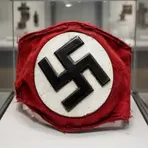

 1
9.9
A cross with bent arms used as the symbol of the Nazi party called swastika
Compounds
Surface Forms
Etymology
Swastika comes from the old Sanskrit word svastika, made from su- meaning 'good' and asti meaning 'to be', so it originally meant 'good being' or 'good luck'. However, the Nazi party adopted the swastika as its emblem in the 20th century, and now the symbol is strongly linked to Nazism and hate.