
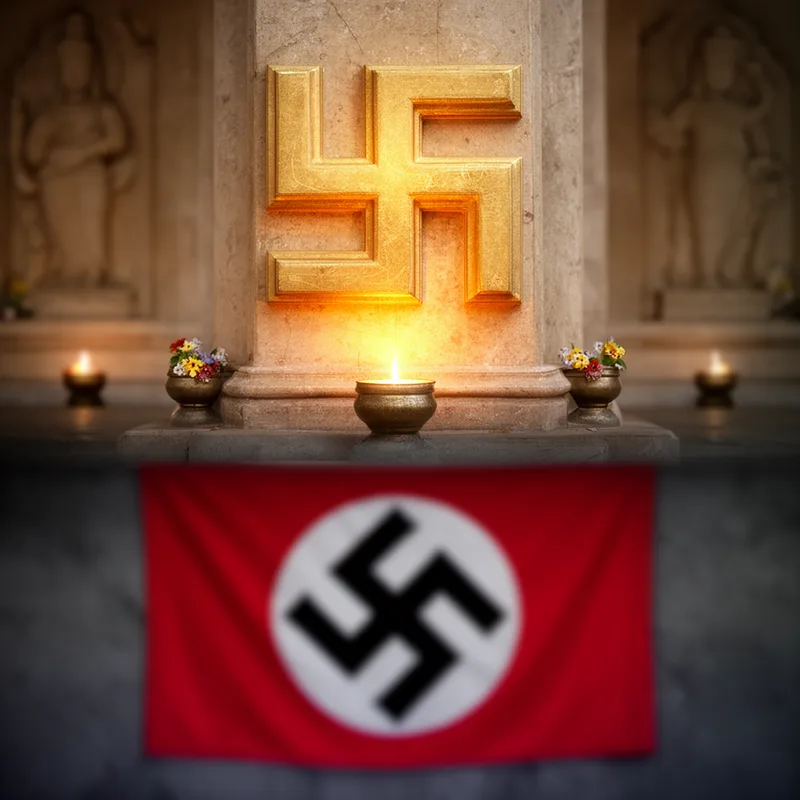
swastika
 1
8.7

- noun
- /ˈswɑːstɪkə/
- Offensive
- The swastika predates the Nazis' version by thousands of years and has a place
Loading YouTube…
Watch on YouTubeSo we had this kid Scotty on our bus one day and we just drew a big swastika that's on his shirt and like really?
- So we had this kid Scotty on our bus one day and we just drew a big swastika that's on his shirt and like really?
- These swastikas have got to be completely and utterly cancelled.
- And then, of course, cut to statuing a swastika into his ass, into Beecher's ass.
- But for those there's in that there's that's the mother's cross that's got a a swastika on it.
Examples
-
The swastika symbol was around long before the Nazis chose it for their notorious emblem.
Blog text (33) -
The swastika in the center is more than eight feet tall.
-
The swastika, however, is a much older symbol than the SS members may have known.
Blog text (34) -
On his chest is a Buddhist swastika, a symbol of luck that was later co-opted by the Nazi Party of Germany.
Blog text (26) -
The motif also occurs by itself as a swastika on a copper ornament and a plain cross-in-circle on a shell ornament.
Academic text (2002) -
The ancient swastika is often seen in Hindu temples as a symbol of good fortune.
-
In many cultures, the swastika represents peace and spirituality.
-
During the exhibition, we learned how the swastika was originally a sacred symbol before its adoption by the Nazis.
Synonyms

 1
9.9
A cross with bent arms used as the symbol of the Nazi party called swastika
Compounds
Surface Forms
Etymology
Swastika comes from the old Sanskrit word svastika, made from su- meaning 'good' and asti meaning 'to be', so it originally meant 'good being' or 'good luck'. That is why many ancient temples and religions used the swastika as a sign of blessing, although its meaning was later changed in the West by Nazi use.