
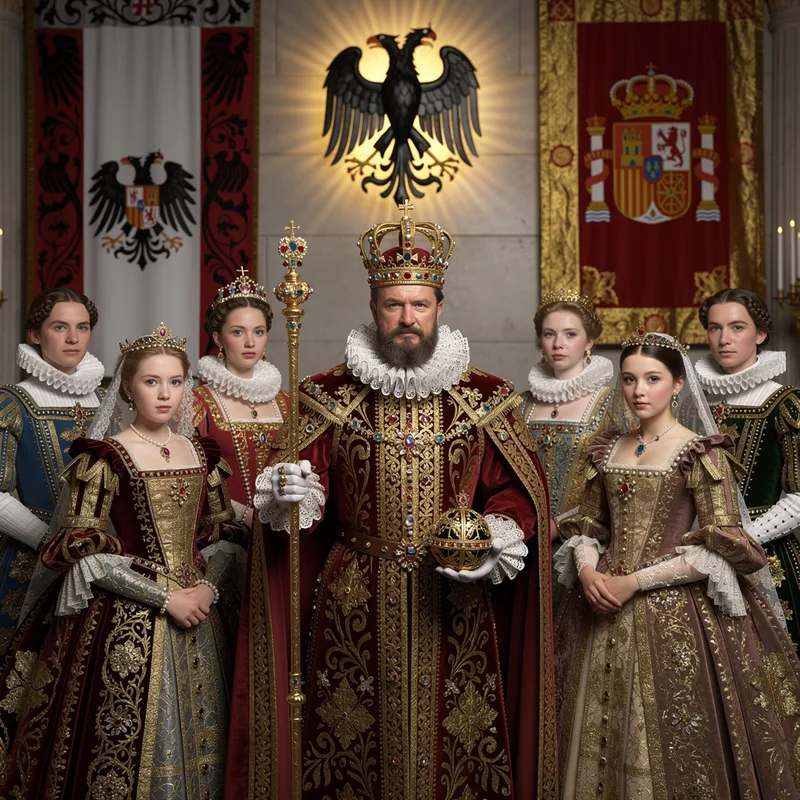
Habsburg
 2
9.1

- proper noun
- /ˈhæbzˌbɜrg/
- The treaty ended the long-standing conflict between France and the Habsburgs.
- Habsburg Empire
- Habsburg monarchy
- Habsburg dynasty
Loading YouTube…
Watch on YouTubeI mean you could only implement the treaty by not implementing any sort of emerging autonomy for nations of the Habsburg Empire.
- I mean you could only implement the treaty by not implementing any sort of emerging autonomy for nations of the Habsburg Empire.
- His his his grandmother was, was, was born Ida Spiegel in the Habsburg monarchy.
- But in the Habsburg monarchy, it's more like the Ukrainians are one group of people in Galicia and, and where they're contesting things with the polls.
Examples
-
The Habsburg Empire's collapse dissolved dynastic loyalties, while nationalist successor states reduced German speakers to ethnic minorities.
Academic text (2016) -
That's how far the Habsburg Empire had fallen.
-
Lot number 15 from the Habsburg collection.
-
It's a book about the black sheep in the Habsburg family.
-
The end of Habsburg dominance altered the balance of power in Europe.
Academic text (2005) -
World War I brought together German speakers from Germany and the Habsburg Empire, fostering national solidarity through shared conflict.
Academic text (2016) -
Others conquer through war, the Habsburgs conquer through marriage.
-
Hungary, Borsos's homeland, had been a subordinate territory of the Habsburg Empire since the sixteenth century.
Academic text (2014) -
The Habsburg dynasty ruled over a vast empire that included Austria and Spain.
-
Habsburg influence in European politics began to wane in the early nineteenth century.
Synonyms
 94
1.8
Close relatives of a king or queen who rules a country
 84
5.3
A family whose members lead a country or group for many generations
 4
4.7
A family of kings and queens who rule a country now or in the past
 2
9.0
A royal German family that ruled parts of Europe and the Holy Roman Empire
Surface Forms
Etymology
Habsburg comes from the name of a castle: the old German parts are Habicht 'hawk' and burg 'castle', so it originally meant 'hawk's castle'. That castle name became the family name, so Habsburg now refers to the royal family that ruled many parts of Europe.