
Gymnosporangium


 1
9.9
- noun
- /dʒɪmˈnoʊspəˌræŋiəm/
- Specialized
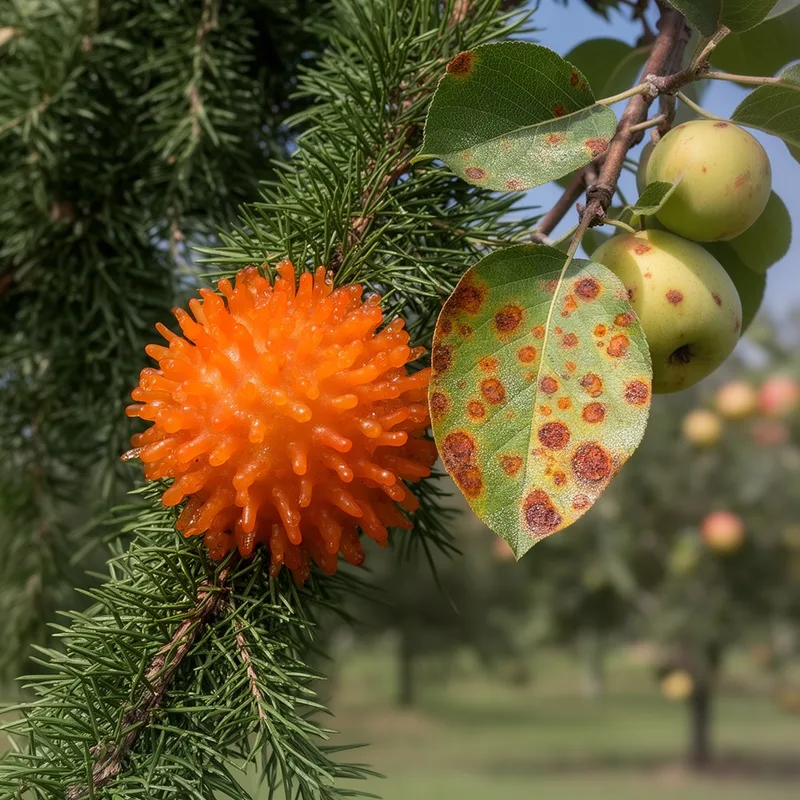
- Gymnosporangium is responsible for cedar-apple rust, a common disease affecting apple orchards.
Examples
-
The presence of orange galls on juniper trees often signals an infection by Gymnosporangium.
-
The Gymnosporangium fungus can harm apple trees.
-
Researchers studied the life cycle of Gymnosporangium to develop disease-resistant plant varieties.
-
Farmers are concerned about Gymnosporangium affecting their crops.
-
Gymnosporangium is known for causing rust diseases on various plants, particularly apples and pears.
-
The fungi Gymnosporangium form distinctive galls on cedar trees, which can be harmful to their health.
-
Agricultural scientists are researching Gymnosporangium to find ways to prevent its adverse effects on conifer trees.
Compounds
- Specialized
1
9.9
A fungus that makes orange-brown spots on apples, pears, and juniper trees
Surface Forms
Morphology
Gymnosporangium = sporangium (opaque) = gymno + sporangium
The combining form 'gymno-' ('naked') is a technical Greek prefix unfamiliar to average learners and the full genus name is a specialized scientific term, so the meaning cannot be derived by typical learners.
Etymology
Gymnosporangium comes from the parts gymno- meaning 'naked' (the same root as in gymnasium) and sporangium meaning 'spore case'. So the name helps us remember that this fungus makes visible 'naked' spore cases on trees, which spread rust disease to apples, pears, and other plants.