
Gymnosporangium juniperi-virginianae


 1
9.9
- noun
- Specialized
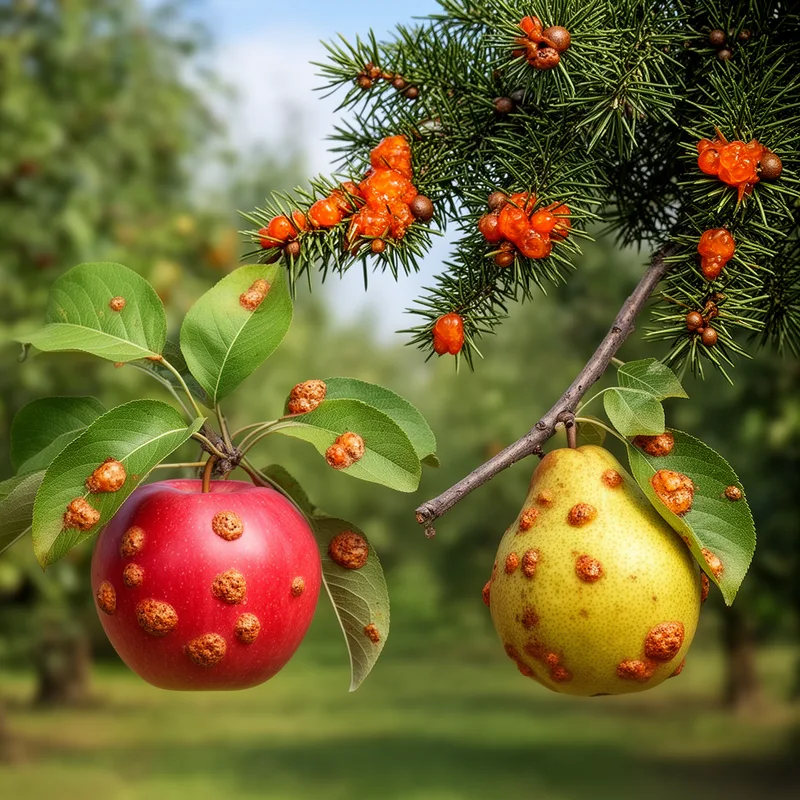
- Orchards often struggle with Gymnosporangium juniperi-virginianae, which causes unsightly spots on apple leaves and fruit.
Examples
-
The spread of Gymnosporangium juniperi-virginianae can be reduced by removing nearby juniper hosts.
-
Researchers are studying how Gymnosporangium juniperi-virginianae infects both cedar and apple trees during its life cycle.
-
Don't forget to check for Gymnosporangium juniperi-virginianae!
-
The Gymnosporangium juniperi-virginianae fungus is notorious for affecting apple trees.
-
Farmers often treat apple orchards for Gymnosporangium juniperi-virginianae to prevent orange-brown spots on their fruit.
-
The presence of Gymnosporangium juniperi-virginianae is identified by distinctive rust spots on apples and pears.
-
In spring, Gymnosporangium juniperi-virginianae spreads its spores from cedar trees to nearby apple plants.
Surface Forms
Morphology
Gymnosporangium + juniperi-virginianae
This is a specialized scientific Latin binomial; its parts are taxonomic morphemes (and one element is not even a dictionary word), so a B1 learner who 'knows' the listed constituents would not be able to infer the specific meaning 'a rust fungus that causes cedar-apple rust'. Although such names are consistent across languages for specialists, their morphological components are not transparently meaningful to general learners, making the expression unintelligible without prior exposure or specialist knowledge.
Etymology
Gymnosporangium juniperi-virginianae may get its name from how it looks and where it lives: Gymnosporangium points to 'naked spore' because it makes orange, jelly-like horns that show its spores, and juniperi-virginianae names its common tree, the 'Virginia juniper'. So the name helps you remember that this rust fungus makes bright, exposed spore growths on junipers and causes orange-brown spots on apples and pears.