

Gram's stain
 1
4.8
1
4.8

- noun
- /ɡræmz steɪn/
- Specialized
- A Gram's stain of the collected sample revealed the presence of gram-negative bacteria.
- Gram's stain and culture
Examples
-
After performing a Gram's stain, they identified the bacteria as gram-positive cocci.
-
Those organisms that appeared in low density in the Gram's stain and grew only at 1+ were considered to be contaminant flora.
Academic text (2003) -
A Gram's stain of the sinus contents identified gram-positive cocci and yeast.
Academic text (2006) -
Cerebrospinal fluid Gram's stain and culture results are negative, but increased intrathecal IgG has been identified in ibuprofen-induced aseptic meningitis.
Academic text (1998) -
The aspirate was evaluated by Gram's stain, aerobic and anaerobic cultures, and Warthin-Starry silver staining (figure 3).
Academic text (2004) -
The laboratory technician examined the slides using a Gram's stain to determine the type of bacteria present.
Synonyms
 1
5.1
1
5.1
A lab test that uses dyes and a microscope to show if bacteria keep a purple colour
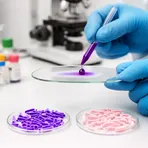
A lab method to tell types of bacteria by staining them to see if they keep a purple dye

A way to stain bacteria with purple dye to tell them apart
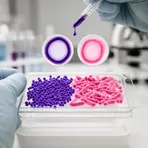
A lab method that stains bacteria to show if they have thick or thin cell walls
Surface Forms
Morphology
Gram's + stain
The phrase combines an eponymous possessive 'Gram's' with the transparent noun/verb 'stain', so a B1 learner who knows 'stain' will likely infer this is a kind of staining procedure. However, the specific meaning (a laboratory technique to classify bacteria as Gram-positive or Gram-negative) requires domain knowledge and the eponym does not signal that function, so the overall interpretation is only partially predictable.
Etymology
Gram's stain is named after a scientist called Gram. The word stain means 'to color', and he used a purple dye so some bacteria kept the color while others did not, letting doctors 'tell them apart', which is why Gram's stain today means the lab test that divides bacteria into two groups.