

Gram stain
 1
5.1
1
5.1

- noun
- /ɡræm steɪn/
- Specialized
- B) Diagnostic aspiration: Microbiology: Gram stain and cell count, ascitic fluid culture in blood culture bottles filled at the bedside.
- CSF Gram stain
Examples
-
There were radioimmunoassays, maybe agglutination tests, gram stains, Petri dishes, nothing much, OK?
-
The CSF Gram stain is positive in 60-90% of cases of acute bacterial meningitis and has a specificity of nearly 100%.
Academic text (1995) -
Results of Gram stain testing and bacterial culture of CSF were negative for all patients.
Academic text (2013) -
Gram stains were made from several samples of collected bacteria, and several bacteria were biochemically identified.
Academic text (2004) -
Most Gram stains observed included Gram-positive cocci in clusters or chains.
Academic text (2004) -
Microscopic examination of Gram-stain preparations and, in some cases, biochemical identification were performed on the bacterial isolates.
Academic text (2004) -
Higher power of a gram stain more clearly shows spores within a shedding epithelial cell (B. B. & H.; 330x).
Academic text (1998) -
The original colon biopsy and the gall bladder were again reviewed using a modified Brown-Brenn tissue gram stain.
Academic text (1998) -
The doctor explained that the Gram stain results indicated a bacterial infection.
-
After performing the Gram stain, the lab technician reported whether the bacteria were Gram-positive or Gram-negative.
Synonyms
 1
4.8
1
4.8
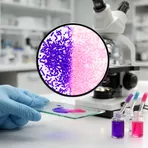
A lab method that uses dye to show whether bacteria keep or lose the dye
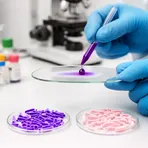
A lab method to tell types of bacteria by staining them to see if they keep a purple dye

A way to stain bacteria with purple dye to tell them apart
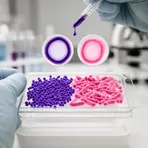
A lab method that stains bacteria to show if they have thick or thin cell walls
Surface Forms
Morphology
Gram + stain
The element 'stain' makes it clear to a learner that this is a type of dyeing/colouring procedure, so they could infer it's a staining technique; however 'Gram' is an eponym (a proper name) and gives no semantic clue about the specific purpose (bacterial classification and the particular reagents). Because the word 'stain' yields partial predictable meaning but the full, technical sense of the term is not derivable from the parts, this is best classified as semi-transparent.
Etymology
The noun Gram stain is named after scientist Hans Christian Gram, who used a purple stain to color bacteria so they looked different under a microscope. Bacteria that keep the purple stain are called 'Gram-positive' and those that do not are called 'Gram-negative', so the test helps tell which kind of bacteria is present.