
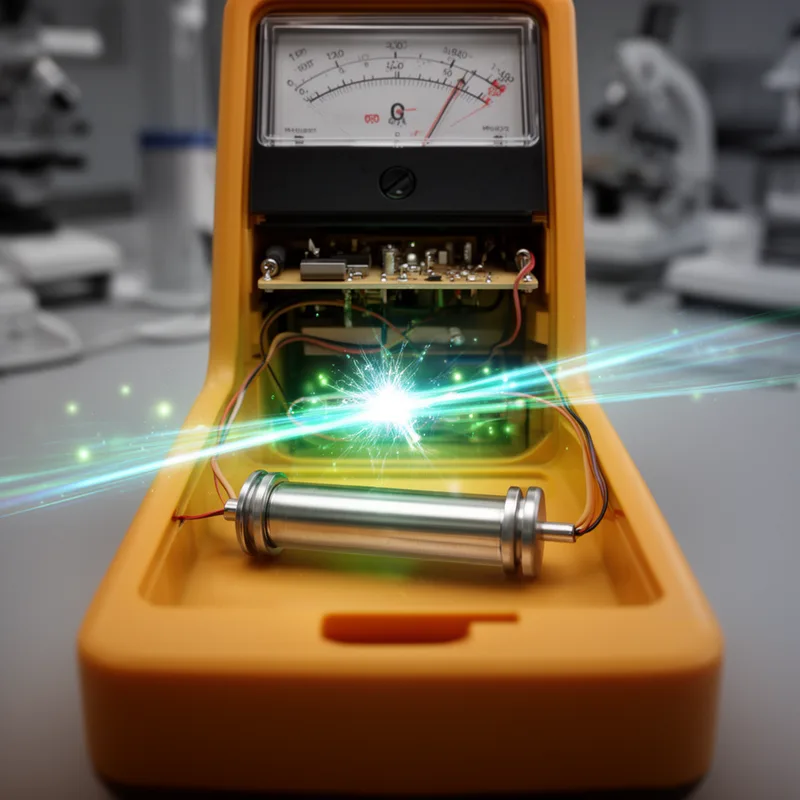
Geiger tube
- noun
- /ˈɡaɪɡər tuːb/
- Specialized
- Radiation is detected when ionizing particles pass through the Geiger tube and create an electrical pulse.
Examples
-
The Geiger tube inside the counter must be replaced periodically for accurate radiation measurement.
-
Older models used a fragile Geiger tube that was easily damaged during fieldwork.
-
The Geiger tube detects radiation levels.
-
Can you explain how a Geiger tube works?
-
Radiation is detected when ionizing particles pass through the Geiger tube and create an electrical pulse.
-
The Geiger tube inside the counter must be replaced periodically for accurate radiation measurement.
-
Older models used a fragile Geiger tube that was easily damaged during fieldwork.
Synonyms

A thin tube inside a Geiger counter that detects radiation

A device that detects radiation by counting particles in a tube filled with gas

A tube that detects radiation and gives an electrical signal showing how strong the radiation is

A device that measures radiation by detecting tiny charged particles in a gas tube

Device that measures radiation that makes charged particles by detecting those particles in a gas

A device that detects and counts slow neutrons using boron
How Sensitive
- Specialized


 1
9.0
1
9.0

- Specialized
- Specialized
7
4.8
- Specialized
- Specialized
Surface Forms
Morphology
Geiger + tube
This is an eponymous technical term: 'tube' transparently signals a hollow cylindrical object, but 'Geiger' is a proper name with no lexical meaning for most learners and the specific function (an ionization chamber in a radiation detector) is highly specialized. A B1 learner who knows the constituents might guess it is some kind of tube associated with a Geiger device, but would not be able to derive its detector/chamber role without prior exposure, so the expression is only partially transparent.
Etymology
Geiger tube is named after the scientist Hans Geiger and refers to the small tube inside a Geiger counter. When invisible 'radiation' passes through, the tube makes a tiny electric 'click' or pulse, so the Geiger tube is the part that 'detects' radiation.