
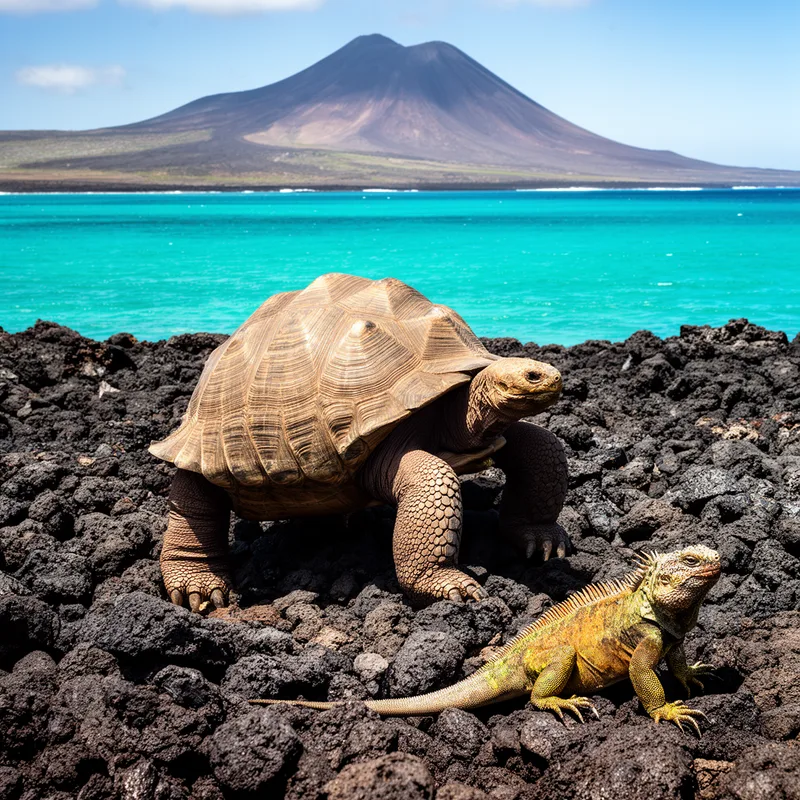
Galapagos
 20
4.2

- proper noun
- /ɡəˈlæpəɡoʊs/
- Tourists flock to the Galapagos to see the fascinating animals that can only be found there.
- Galapagos Islands
- Galapagos penguins
- Galapagos tortoise
Loading YouTube…
Watch on YouTubeThe Galapagos and the Canary Islands are two other good examples, and they come from what are known as plumes.
- The Galapagos and the Canary Islands are two other good examples, and they come from what are known as plumes.
- And when the Academy went on their Galapagos expeditions, it was one of the most complete or, like, thorough surveys of the archipelago.
- And many years ago, when I was in the Galapagos Islands, I bought a hat.
Examples
-
In it, a young scientist explores the biological diversity and unique geologic history of the Galapagos archipelago.
Academic text (1999) -
Charles Darwin developed his theory of evolution after studying the species of the Galapagos.
-
And many years ago, when I was in the Galapagos Islands, I bought a hat.
-
- When we get out of the canal, how long will it take you to get to the Galapagos?
-
It's our last day in the Galapagos Islands, which is so sad, but we have one last excursion this morning.
-
We went to the Galapagos Islands to see the penguins.
Fiction book (2002) -
Did you know that the penguins that live on the Galapagos are the northernmost penguins in the world?
Fiction book (2002) -
His reconnaissance of the Galapagos Islands in 1835 was characteristically detailed and usefully perplexed.
Academic text (2009) -
The Galapagos Islands are known for their unique wildlife and stunning landscapes.
Synonyms
 6
3.2
A group of volcanic islands in the Pacific Ocean that belong to Ecuador and have many animals found nowhere else
Compounds
6
3.2
A group of volcanic islands in the Pacific Ocean that belong to Ecuador and have many animals found nowhere else
Surface Forms
Etymology
Galapagos comes from the old Spanish word galápago, which means 'tortoise', because early sailors found many giant tortoises on the islands and so the islands were named for these animals.