

Fumaria sempervirens
- noun
- Specialized
- Fumaria sempervirens is known for its distinctive yellow-tipped pink flowers that attract many pollinators.
Examples
-
The botanical garden has a rare specimen of Fumaria sempervirens in its northeastern section.
-
The Fumaria sempervirens blooms beautifully in early spring.
-
Fumaria sempervirens is occasionally found growing wild along forest edges in Canada.
-
Researchers studied Fumaria sempervirens to analyze its unique flower coloration.
-
Have you ever seen a Fumaria sempervirens in the wild?
-
In the springtime, Fumaria sempervirens can be spotted blooming along the paths of northeastern forests.
-
Fumaria sempervirens, often admired for its unique beauty, is a highlight in the garden's collection of native plants.
Synonyms

A small wild plant with loose groups of pink flowers tipped with yellow
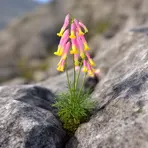
A small wild plant with pink flowers tipped with yellow growing on rocks

A small plant from northeastern North America with clusters of pink flowers tipped yellow
Surface Forms
Morphology
This is a standard botanical binomial combining a genus name (Fumaria) with a Latin epithet (sempervirens = 'always green' / evergreen). If a learner knows the constituent meanings, the species name compositionally denotes a Fumaria that remains green year‑round, and the taxonomic Latin naming pattern is cross‑linguistically regular, so the meaning is directly derivable.
Etymology
Fumaria sempervirens comes from Latin words that make a clear picture: Fumaria may come from the Latin for 'smoke' because its thin leaves and loose flower clusters can look like little puffs of smoke. The second word, sempervirens, means 'always green', so the full name describes a smoke-like plant that stays green and helps you remember this evergreen herb.

