
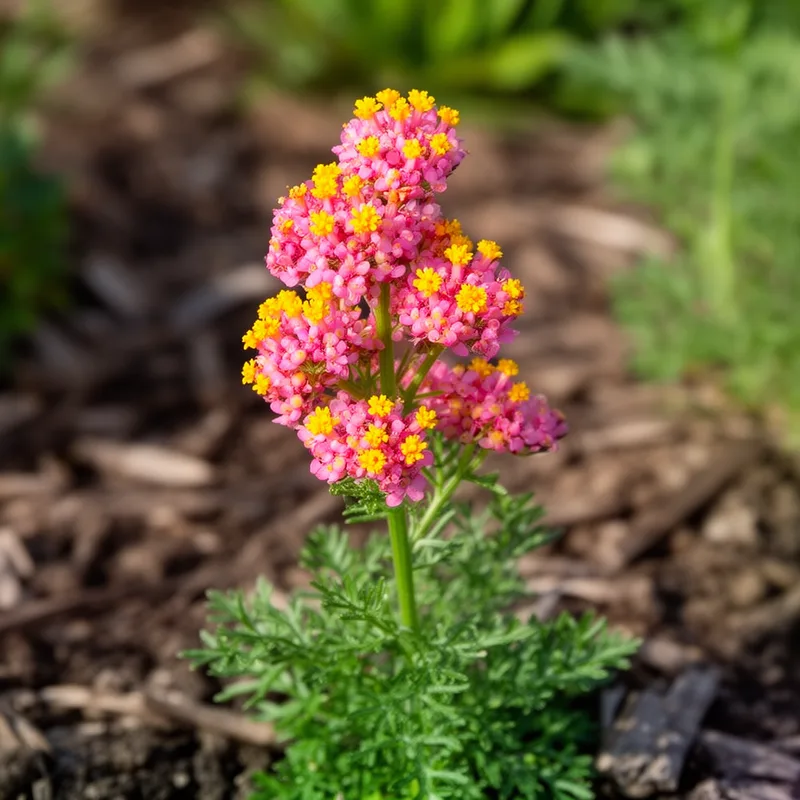
Roman wormwood
- noun
- /ˈroʊmən ˈwɜrmˌwʊd/
- Specialized
- Gardeners appreciate Roman wormwood for its attractive pink and yellow flowers.
Examples
-
The botanical garden features a rare specimen of Roman wormwood in its North American section.
-
Many gardeners appreciate Roman wormwood for its attractive yellow-tipped pink flowers and versatility in landscaping.
-
Researchers study the medicinal properties of Roman wormwood for potential pharmaceutical uses.
-
The Roman wormwood has beautiful pink flowers.
-
Many gardeners enjoy planting Roman wormwood for its unique color.
-
At the botanical garden, you can see a healthy specimen of Roman wormwood, admired for its striking floral display.
-
The Roman wormwood is often used in gardens for its interesting foliage and lovely flowers that bloom in late summer.
Synonyms
A small wild plant with pink flowers that have yellow tips and grows in northeastern North America

A small wild plant with pink flowers tipped with yellow growing on rocks

A small wild plant with loose groups of pink flowers tipped with yellow
Surface Forms
Morphology
The phrase is compositionally transparent: 'Roman' indicates origin/association with Rome (or Italy) and 'wormwood' names the plant, so the compound clearly denotes a type or variety of wormwood linked to Rome. Such place-based botanical naming is cross-linguistically common, so a B1 learner who knows both words would readily infer the meaning.
Etymology
Roman wormwood was named by early settlers who thought the local flower looked like the European wormwood. The word wormwood comes from its bitter leaves that people once used to 'treat worms', so the name helps you remember it is a bitter, medicinal herb.

