

French ultramarine blue
- noun
- /frɛntʃ ˌʌltrəˈmɛrɪn blu/
- Specialized
- The artist chose French ultramarine blue for the sky in her painting.
- French ultramarine blue and alizarin
- French ultramarine blue and crimson
Examples
-
The artist preferred French ultramarine blue for its vibrant color and consistency.
-
Her painting features deep shades of French ultramarine blue that create a striking effect.
-
Manufacturers began producing French ultramarine blue in the nineteenth century as a cost-effective alternative to natural ultramarine.
-
Have you ever used French ultramarine blues in your artwork?
-
The artist chose French ultramarine blue for its vibrant hue in the landscape painting.
-
French ultramarine blue is often used by painters to create deep skies and oceans.
-
For the portrait, she relied on French ultramarine blue to mix the perfect shade of blue for the background.
Synonyms

 1
6.8
1
6.8

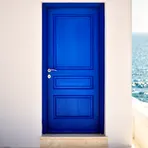
A deep bright blue paint color first made from a stone called lapis lazuli and now often made artificially
 1
7.9
1
7.9
Has a bright deep blue color like the sea

A bright deep blue colour used in paint and art

A bright deep blue colour used for paint and cloth

A deep blue pigment made from a blue stone for painting
How Blue

Surface Forms
Morphology
French + ultramarine + blue
The meaning is directly derivable from the parts: 'ultramarine blue' names a particular intense blue pigment and 'French' simply specifies a national variant or origin. This is a straightforward attributive adjective + noun composition that follows normal English patterns and would be clear to a B1 learner who knows the constituent words.
Etymology
French ultramarine blue comes from the 1800s when French chemists learned to make the rich blue of the rare stone lapis lazuli in a factory. Because this new blue was made in France it became known as French ultramarine, and today the name means 'a deep blue pigment made in a factory as a cheaper alternative to the natural ultramarine'.