
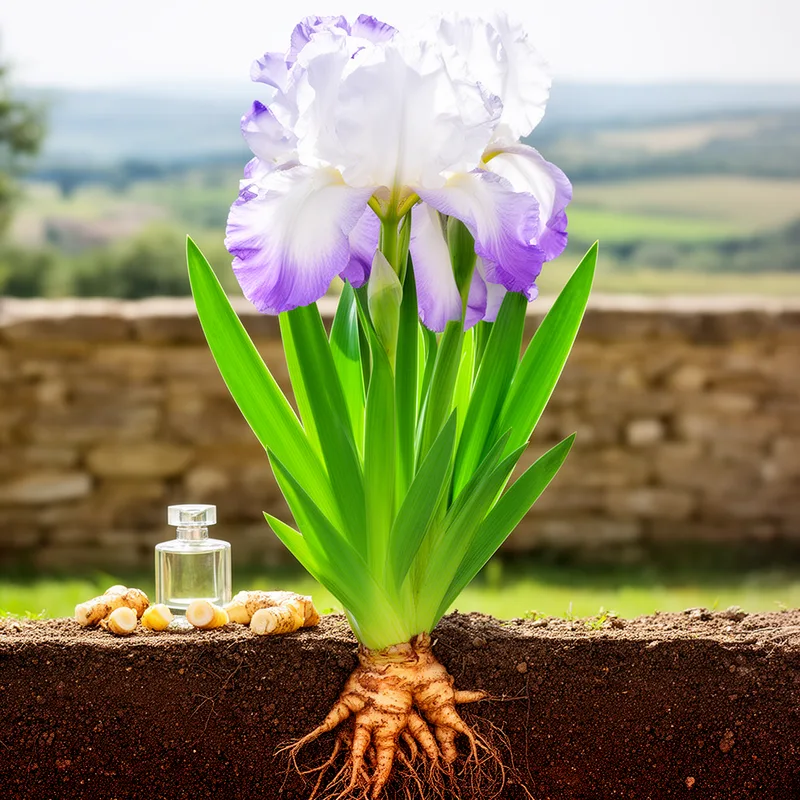
Florentine iris
- noun
- The Florentine iris is prized for its fragrant rhizomes, which are used in perfumes.
Examples
-
She planted a Florentine iris in her garden, attracted by its striking white and lavender flowers.
-
Botanists found several Florentine irises blooming in the ancient gardens of Tuscany.
-
The Florentine iris blooms beautifully in the spring.
-
I planted several Florentine irises in my garden.
-
The Florentine iris is known for its stunning white flowers with hints of lavender, making it a favorite among gardeners.
-
In southern Europe, the Florentine iris thrives in sunny spots, adding elegance to flowerbeds with its large blooms.
-
Many people enjoy planting the Florentine iris in their landscapes due to its pleasant fragrance and beautiful appearance.
Synonyms

A large white garden flower with a sweet-smelling underground root used in perfume
Surface Forms
Morphology
The phrase is a simple adjective + noun composition: 'Florentine' (relating to Florence) + 'iris' (a flower), so a B1 learner who knows both words will readily infer it denotes an iris associated with Florence or of Florentine origin. The specific botanical details (species name, color, fragrance) are additional encyclopedic information but do not block comprehension of the core meaning; this follows regular cross-linguistic adjective+noun patterns.
Etymology
Florentine iris probably takes its name from Florentine, meaning 'from the city of Florence', and the flower iris. People found this large white and light-purple iris in gardens around Florence, so it became known as the iris 'from Florence', which is why the name refers to that species.

