
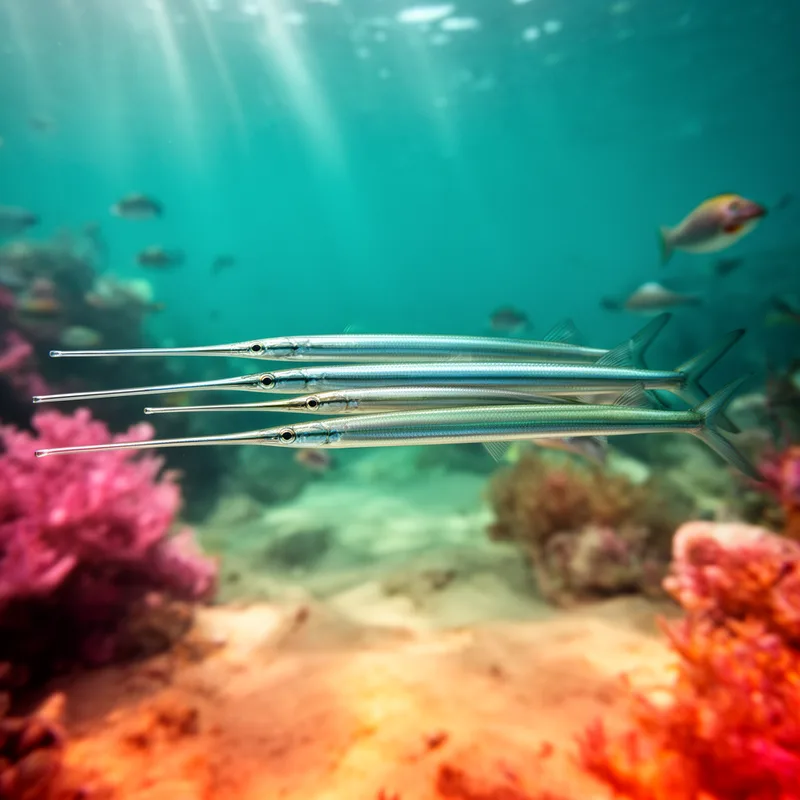
Fistulariidae
- noun
- /ˌfɪstjʊˈlɛrɪˌeɪ/
- Specialized
- The Fistulariidae are easily recognized by their long, tubular snouts and slender bodies.
Examples
-
The Fistulariidae family includes several species of cornetfishes.
-
Many species in the Fistulariidae family are found in coral reef habitats worldwide.
-
Scientists studied the distribution of Fistulariidae across the Indo-Pacific region.
-
Wow! The Fistulariidae are truly remarkable fish!
-
Many species in the Fistulariidae family can be found in tropical and subtropical seas.
-
Scientists studied the behavior and characteristics of Fistulariidae in their natural habitats.
-
The Fistulariidae are known for their distinctive appearance with elongated bodies and long snouts.
Synonyms
A group of long sea fish with tube-like snouts called cornetfish
Compounds
- Specialized
A group of long sea fish with tube-like snouts called cornetfish
Surface Forms
Morphology
Fistulariidae = Fistularia (opaque) = Fistularia + idae
Formed from the genus name 'Fistularia' plus the scientific family suffix '-idae' (meaning 'family of'); this taxonomic formation is specialized and not transparent to average learners.
Etymology
Fistulariidae comes from the Latin fistula, which means 'pipe' or 'tube', plus the family ending -idae. That is why this family of cornetfishes is named for their long, tube-like snouts that look like a small 'pipe'.

