

Finnic
- noun
- /ˈfɪnɪk/
- Specialized
- The Finnic languages, such as Finnish and Estonian, are spoken by millions in Northern Europe.
Examples
-
The other historical peoples of Baltic-Finnic stock, the Vots, Izhorians, southern Karelians, and Vepsians, maintained their intrinsic identity.
Academic text (2000) -
The name of the Moskva River from which the town got its name is not of Slavic but of Finnic origin.
Academic text (2000) -
During the Middle Ages, two Finnic tribes, the Mer and the Muromians, assimilated into the surrounding Russian culture and language.
Academic text (2000) -
In the oral poetry of the Udmurts—also of Finnic-Permian affiliation—moko is a taboo name for bear, the sacred animal.
Academic text (2000) -
In the Russian and Finnic traditions, laments continued, but the context of their recitative text shifted from an emphasis on the shelter-giving and cherishing mother figure of pre-Christian times to the powerful Queen of Heaven in Christian liturgy.
Academic text (2000) -
The tradition of laments emerged, one of the favorite folk traditions practiced by Baltic-Finnic peoples around the eastern and southern coasts of the Baltic Sea, also in use among other Finno-Ugrian ethnic groups.
Academic text (2000) -
The Finnic tribes have a rich cultural heritage that is distinct from their neighboring groups.
-
Many people study the Finnic branch of the Finno-Ugric language family to understand its unique characteristics.
Synonyms
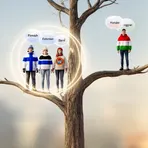
A group of Finno-Ugric languages including Finnish and Estonian but not Hungarian

A group of related languages that includes Finnish and Estonian but not Hungarian
Compounds

- Specialized
A group of languages spoken around the Baltic Sea, for example Finnish and Estonian
Surface Forms
Morphology
Etymology
The word Finnic comes from the name Finn, for the people of Finland and nearby groups, plus the ending -ic which means 'related to', as in historic meaning 'related to history'. So Finnic means 'related to the Finns' and is used for the group of languages like Finnish and Estonian.

