
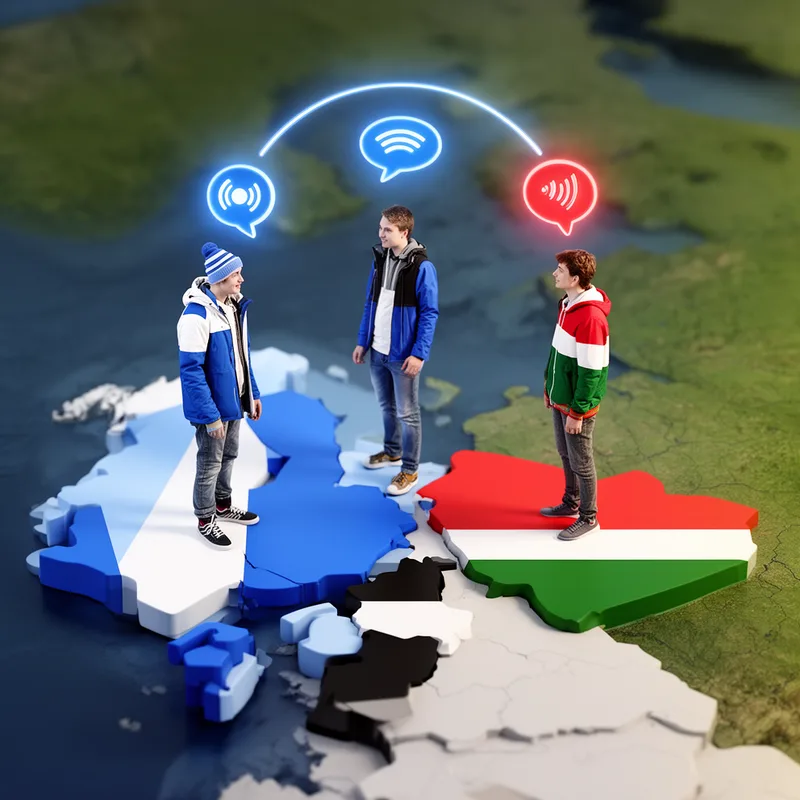
Fennic
- noun
- Specialized
- Estonian and Finnish both belong to the Fennic branch of the Finno-Ugric family.
Examples
-
The Fennic languages differ significantly from Hungarian, although all share ancient roots.
-
The Fennic languages are spoken in Northern Europe.
-
Scholars have traced the origins of the Fennic languages to the areas surrounding the Baltic Sea.
-
Finnish is a Fennic language.
-
Estonian and Finnish both belong to the Fennic branch of the Finno-Ugric family.
-
Scholars have traced the origins of the Fennic languages to the areas surrounding the Baltic Sea.
-
The Fennic languages are spoken in Northern Europe.
Synonyms

A group of languages like Finnish and Estonian spoken near the Baltic Sea
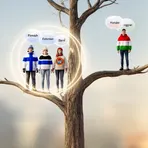
A group of Finno-Ugric languages including Finnish and Estonian but not Hungarian
Surface Forms
Morphology
Fennic = Finn (semi-transparent) = fenn + ic
Formed from the ethnonym (Finn) + adjectival suffix '-ic'; the relation to Finland/Finns is clear but the precise technical scope (a specific subgroup of Finno-Ugric languages) is specialized.
Etymology
The word Fennic comes from an old name Fenni for the people of Finland and the nearby lands, and it shares the same root as the English word Finn. So, Fennic is used for the group of languages (like Finnish and Estonian) that come from that region, in other words 'from the Finns' or 'from Finland'.

