
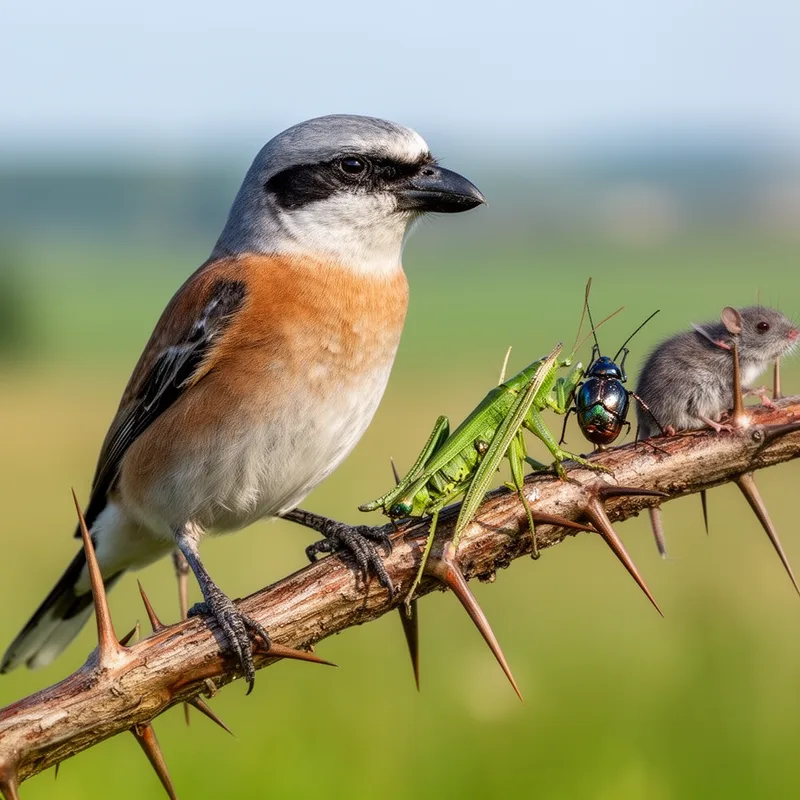
European shrike
- noun
- UK
- It is fascinating to observe how the European shrike impales its prey on sharp branches.
Examples
-
The European shrike is often spotted perched on fences searching for insects and small mammals.
-
Many European shrikes migrate during the winter months.
-
Birdwatchers from across the continent travel to see different species of European shrike in their natural habitats.
-
The European shrike is known for its unique hunting method.
-
Birdwatchers from across the continent travel to see different species of European shrike in their natural habitats.
-
It is fascinating to observe how the European shrike impales its prey on sharp branches.
-
The European shrike is often spotted perched on fences searching for insects and small mammals.
Synonyms
 2
9.9
2
9.9

A small bird with a hooked bill that eats insects and small animals and often puts its food on thorns

 1
9.5
1
9.5
A songbird that hunts small animals and often sticks them on thorns or wire
A medium-sized grey bird that eats small animals and often puts them on thorns or barbed wire
Surface Forms
Morphology
The meaning is directly derived from the constituents: 'European' specifies geographic origin and 'shrike' names a type of bird, so together they denote the shrike species found in Europe. This adjective+noun compositional pattern is common and cross-linguistically transparent, so a B1 learner who knows both words would understand the MWE.
Etymology
European shrike is named for the bird's odd habit: it catches insects and small animals and sticks them on thorns or barbed wire. People compared this to a butcher hanging meat, so it got the nickname 'butcherbird', and that's why the name means 'a small predatory songbird that impales its prey'.