
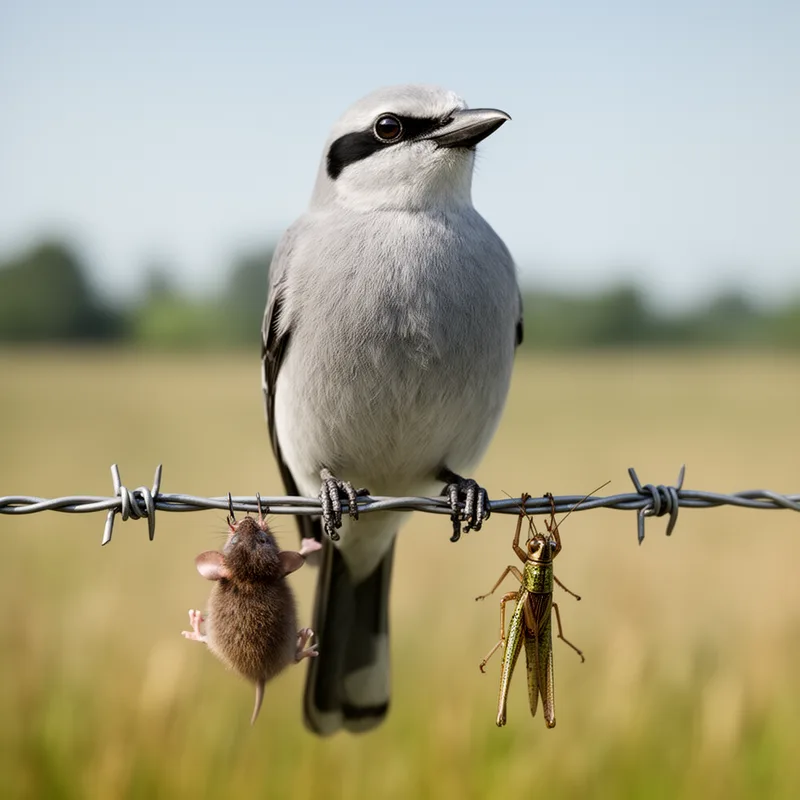
Lanius excubitor
- noun
- Specialized
- Lanius excubitor is notable for its behavior of impaling prey on thorns or barbed wire.
Examples
-
The diet of Lanius excubitor includes insects, small birds, and rodents.
-
Birdwatchers were excited to spot a Lanius excubitor during their excursion in eastern Europe.
-
The Lanius excubitor is often seen perched on fences.
-
Have you ever spotted a Lanius excubitor in the wild?
-
Lanius excubitor is known for its distinctive method of impaling small animals on sharp objects.
-
While hiking, we were thrilled to catch a glimpse of the Lanius excubitor perched on a branch.
-
The feeding habits of Lanius excubitor reveal its predatory nature, as it catches insects and small mammals.
Synonyms
A small songbird in Europe that catches insects and small animals and puts them on thorns
Surface Forms
Morphology
Lanius + excubitor
This is a Latin scientific binomial (taxonomic name) rather than a compositional English phrase. Although 'Lanius' signals the shrike genus, 'excubitor' is non‑English/undefined here and the specific species identity ('great grey shrike') cannot be inferred from the parts by a B1 learner, so the overall meaning is not derivable from the constituents.
Etymology
Lanius excubitor comes from Latin words: Lanius meaning 'butcher' and excubitor meaning 'watchman'. This fits the bird because it catches small animals and often sticks them on thorns or wire, so the name helps you picture the bird and remember it.

