
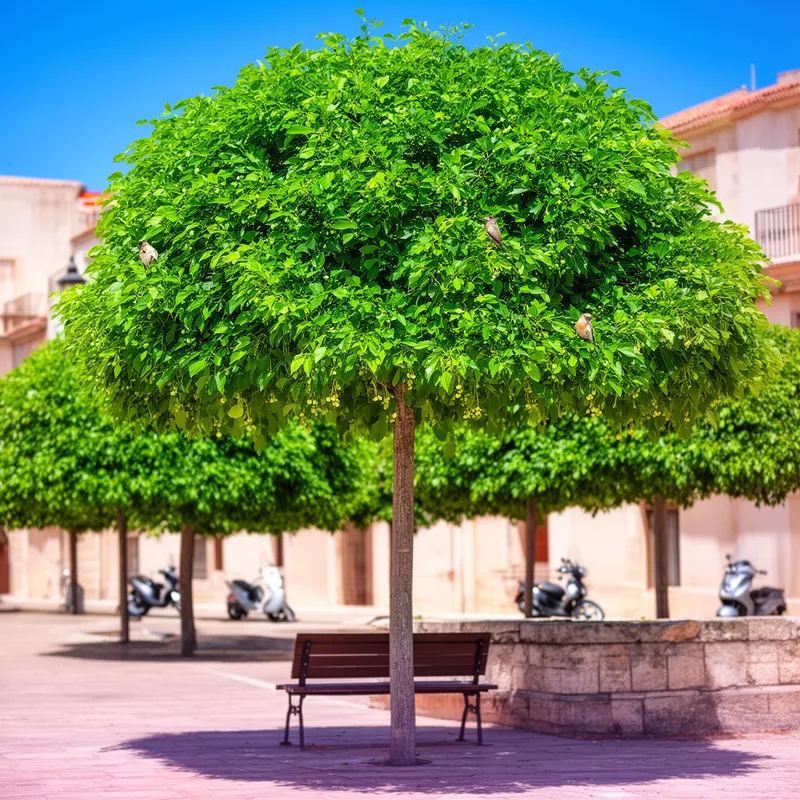
European hackberry
- noun
- UK
- The European hackberry is commonly planted along Mediterranean streets for its dense shade.
Examples
-
Botanists admire the resilience of the European hackberry in drought-prone areas.
-
Birds are attracted to the fruit of the European hackberry in the summer months.
-
The European hackberry is a beautiful tree.
-
I planted a European hackberry in my garden.
-
The European hackberry provides a cool canopy for families enjoying picnics in the park.
-
Many cities in southern Europe plant the European hackberry for its ability to provide shade during hot summers.
-
In the botanical garden, the European hackberry stands out with its vibrant green leaves and sturdy trunk.
Synonyms
 1
9.4
1
9.4

A tree with small dark berries and strong wood that grows in many soils

A large tree from southern Europe with bright green leaves that gives good shade

A leafy tree from southern Europe that loses its leaves in winter and gives shade
Surface Forms
Morphology
The meaning 'a hackberry tree from Europe' is directly and transparently derived from combining 'European' (connected with Europe) and 'hackberry' (a Celtis tree). Adjective + noun species/location naming is a common compositional pattern cross-linguistically, so a B1 learner who knows both constituents should be able to infer the MWE's meaning.
Etymology
The name European hackberry simply names the hackberry tree that grows in Europe. People call it a 'hackberry' because it makes small berry-like fruit that birds eat, so the name tells us it is a berry-producing tree from southern Europe often planted for shade.