
European beggar-ticks
- noun
- UK
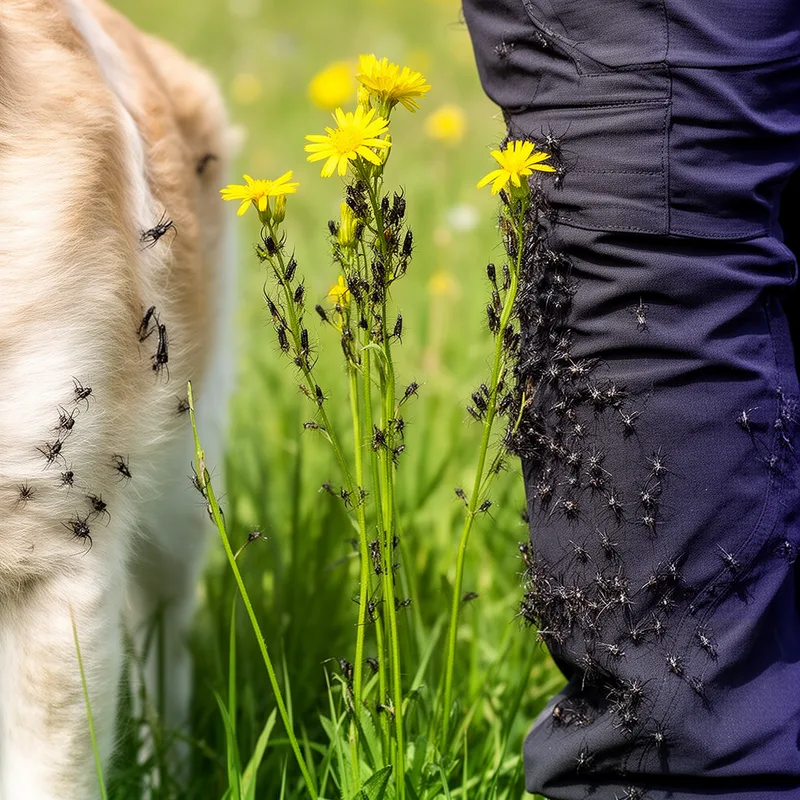
- The fields were filled with European beggar-ticks in late summer, their barbed seeds clinging to passing animals.
Examples
-
Hikers often find European beggar-ticks stuck to their clothes after walking through meadows.
-
Researchers study the spread of European beggar-ticks as part of Eurasian plant ecology projects.
-
The European beggar-ticks are often found in meadows.
-
Have you seen the European beggar-ticks around here?
-
Hikers often find European beggar-ticks stuck to their clothes after walking through meadows.
-
The fields were filled with European beggar-ticks in late summer, their barbed seeds clinging to passing animals.
-
Researchers study the spread of European beggar-ticks as part of Eurasian plant ecology projects.
Synonyms

A plant found in wet places with leaves in three parts and small yellow flowers whose seeds stick to clothes

A riverbank plant with leaves divided into three parts, small yellow flowers, and seeds that stick to fur

A plant that grows near water with leaves in three parts and small yellow flowers
Surface Forms
Morphology
European + beggar-ticks
While 'European' is fully transparent, the fossilized compound 'beggar-ticks' contains familiar words ('beggar' + 'ticks') that hint at small, clinging objects; a learner could plausibly infer something that sticks to clothing like ticks. However, knowing the constituents alone is unlikely to yield the specific botanical meaning (a plant with barbed seeds), so the relation is partially clear but not fully predictable to a B1 learner.
Etymology
The name European beggar-ticks comes from the plant's hooked seeds that cling to clothing and animal fur as people walk past. The parts beggar and ticks show the image: the seeds grab on like a 'beggar' holding tight or like a small 'tick', so the name helps you remember the seeds 'stick' to passersby.

