
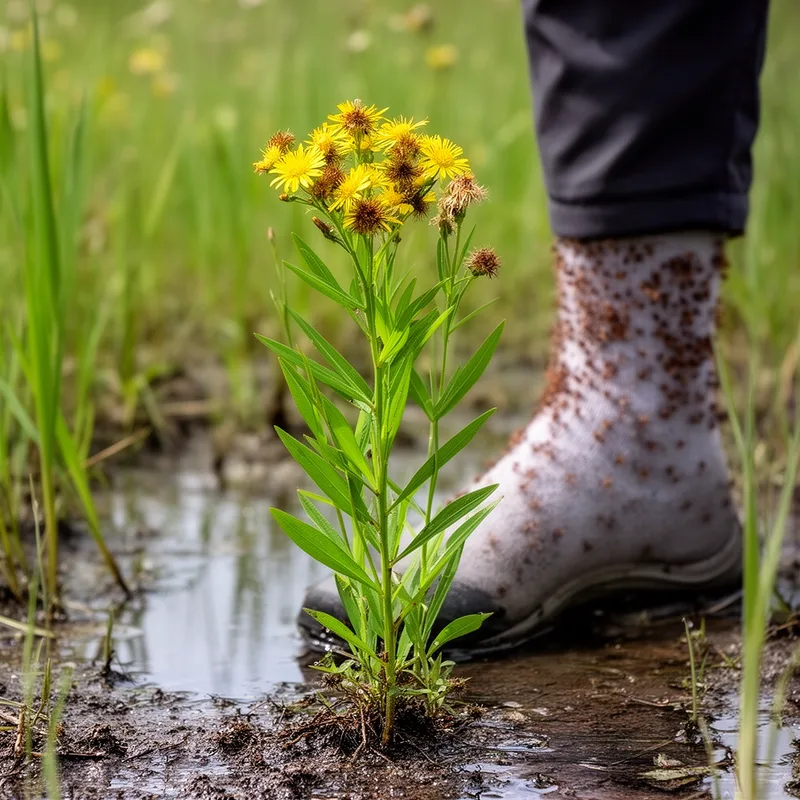
trifid beggar-ticks
- noun
- UK
- Her field guide helped her identify the trifid beggar-ticks by their distinctive trifid leaves.
Examples
-
The wetland was full of trifid beggar-ticks growing among the other wildflowers.
-
After walking through the marsh, his socks were covered with seeds from trifid beggar-ticks.
-
Look at the trifid beggar-tick!
-
The trifid beggar-ticks bloom in the summer.
-
The wetland was full of trifid beggar-ticks growing among the other wildflowers.
-
Her field guide helped her identify the trifid beggar-ticks by their distinctive trifid leaves.
-
After walking through the marsh, his socks were covered with seeds from trifid beggar-ticks.
Synonyms

A plant that grows near water with leaves in three parts and small yellow flowers

A riverbank plant with leaves divided into three parts, small yellow flowers, and seeds that stick to fur

A plant with yellow flowers from Europe and Asia whose seeds have small hooks that stick to fur and clothes

A plant with yellow flowers and small prickly fruits that stick to fur or clothing

A plant with small sticky seeds that attach to clothes or animal fur
Surface Forms
Morphology
trifid + beggar-ticks
The adjective 'trifid' clearly means 'three-lobed', so its contribution is transparent; however 'beggar-ticks' is a specialized plant name whose literal parts ('beggar' + 'ticks') do not transparently indicate 'a bur marigold' to a learner. A B1 learner who knows both constituents could infer 'a three-lobed beggar-tick' but not the specific botanical identity or ecological details, so the overall expression is only partially predictable.
Etymology
Trifid beggar-ticks shows two simple facts about the plant: trifid means the leaves are split into 'three parts', and beggar-ticks refers to the small seedheads that 'cling' to clothing like little hitchhikers. That's why the name means a wild plant with three-part leaves and sticky seeds that cling to people or animals.

