
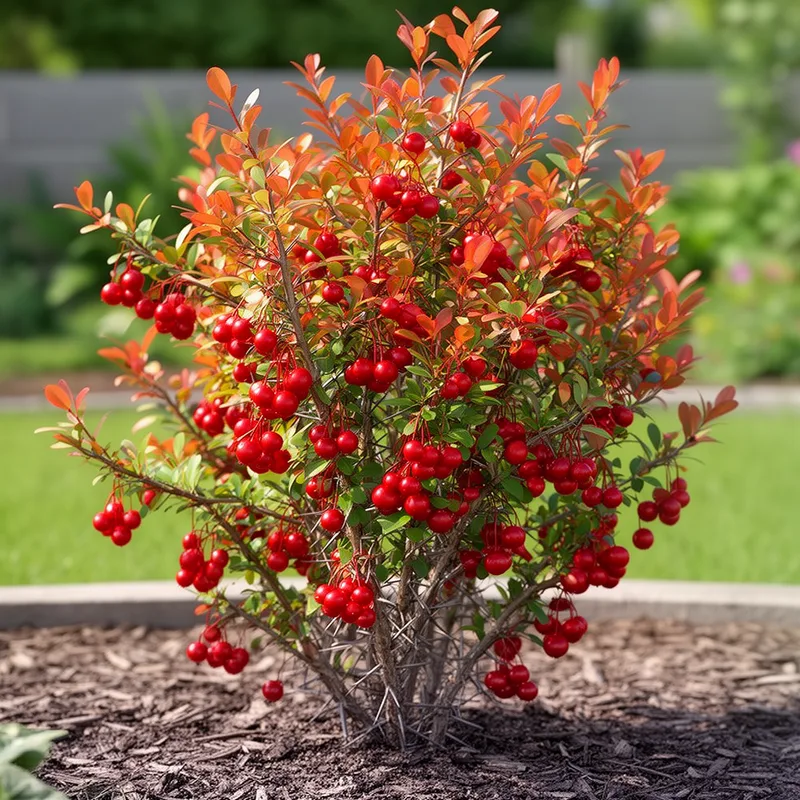
European barberry
- noun
- /ˌjʊərəˈpiːən ˈbɑːrbəri/
- UK
- The European barberry is popular for its vibrant red berries and prickly stems.
Examples
-
Wild birds feed on the berries of the European barberry during the fall and winter months.
-
Gardeners often plant European barberry as an ornamental shrub due to its attractive foliage.
-
The European barberry thrives in many gardens.
-
I saw a European barberry bush yesterday.
-
Gardeners often plant European barberry in their landscapes for its beautiful red berries and sharp thorns.
-
The European barberry shrub is well-known for its clusters of bright red berries that attract various bird species.
-
In many areas, the European barberry is appreciated for its ornamental qualities as well as its tasty fruit.
Synonyms

 1
8.2
1
8.2

A thorny bush with yellow flowers and small red or blue berries
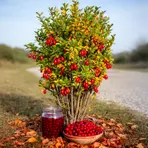
A small upright bush with leaves that fall in winter and red berries used in jams

A small upright shrub with bright red berries in clusters
How Tall

Surface Forms
Morphology
The phrase is a straightforward modifier+noun combination where 'European' specifies origin and 'barberry' names the shrub, so the overall meaning ('a barberry from Europe') is directly derivable from its parts. This compositional pattern is common across languages and follows regular English noun phrase formation, so a B1 learner who knows both constituents will readily understand it.
Etymology
European barberry comes from naming the plant by place and type: European shows it came from Europe and barberry was the name for a thorny bush with bright red berries, so the name simply means 'the barberry that comes from Europe'.