

Berberis vulgaris
- noun
- /ˈbɜr.bər.ɪs ˈvʌl.ɡər.ɪs/
- Specialized
- Gardeners frequently plant Berberis vulgaris for its attractive foliage and bright red fruit.
Examples
-
The berries of Berberis vulgaris are often used in traditional jams and jellies.
-
Berberis vulgaris can be found growing wild along roadsides in many parts of the United States.
-
The Berberis vulgaris is often used in traditional medicine.
-
Have you seen the Berberis vulgaris in the garden?
-
You can identify Berberis vulgaris by its clusters of red berries along the garden path.
-
Many people enjoy the tart flavor of the berries from the Berberis vulgaris in their culinary dishes.
-
The upright growth of Berberis vulgaris makes it a popular ornamental shrub in landscaping.
Synonyms

A small upright shrub with bright red berries in clusters
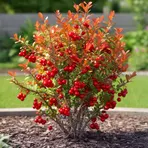
A small shrub with clusters of red berries and prickly stems often grown in gardens
Surface Forms
Morphology
The binomial is fully compositional: 'Berberis' identifies the barberry genus and 'vulgaris' is a standard Latin epithet meaning 'common' or 'widespread', so the phrase denotes the common barberry. This follows regular scientific naming conventions that are cross-linguistically transparent, allowing a learner who knows both constituents to derive the meaning.
Etymology
Berberis vulgaris gets its name from old words for the barberry and from Latin. The first part, Berberis, comes from old names for the shrub with bright red, sour berries, and vulgaris is Latin for 'common', so the whole name simply means 'common barberry'.

