

Eurasian hamster
- noun
- /jʊəˈreɪʒən ˈhæmstə/
- UK
- Unlike the golden hamster, the Eurasian hamster is much larger and has a distinctive brown fur.
Examples
-
The Eurasian hamster is studied for its unique hibernation habits in cold climates.
-
Did you know that the Eurasian hamster can store food in its cheeks?
-
Farmers often encounter the Eurasian hamster in their fields during the summer.
-
Unlike the golden hamster, the Eurasian hamster is much larger and more aggressive.
-
The Eurasian hamster is a fascinating pet.
-
Farmers often encounter the Eurasian hamster in their fields during the summer.
-
The Eurasian hamster is studied for its unique hibernation habits in cold climates.
Synonyms
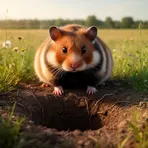
A large wild hamster that lives alone in holes in the ground in Europe and parts of Asia
Surface Forms
Morphology
This is a straightforward adjective + noun combination: 'Eurasian' (of Europe and Asia) modifies 'hamster' (a small rodent), so the meaning is directly the hamster species found in Europe and Asia. The compositional pattern (region‑name + animal) is common and predictable across languages, so a B1 learner knowing both words would understand it.
Etymology
Eurasian hamster: the name Eurasian shows it comes from both Europe and Asia, and hamster comes from an old word for the animal's habit of filling its cheek pouches with food, like 'to hoard'. So the name fits this large hamster found across Europe and Asia that stores food for later.

