
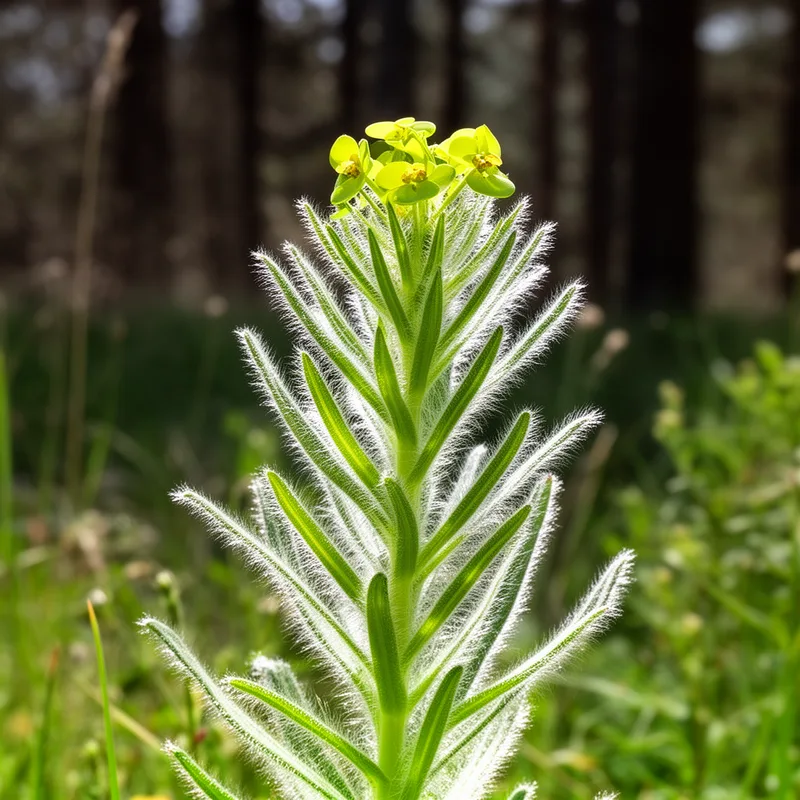
Euphorbia villosa
- noun
- Specialized
- Botanists admire Euphorbia villosa for its distinctively hairy foliage.
Examples
-
Euphorbia villosa, with its hairy leaves, is often found growing in the wild across central Europe.
-
Euphorbia villosa thrives in woodland edges throughout central Europe.
-
Conservation efforts are underway to protect Euphorbia villosa in its natural habitats.
-
I saw a beautiful Euphorbia villosa in the garden.
-
The Euphorbia villosa thrives in well-drained soil.
-
In spring, Euphorbia villosa produces vibrant yellow flowers that attract various pollinators.
-
Euphorbia villosa can be identified by its unique hairy stems and leaves, making it stand out among other plants.
Surface Forms
Morphology
Euphorbia + villosa
This is a Linnaean binomial composed of a genus name (Euphorbia, a plant) plus a descriptive specific epithet; if a learner knows 'Euphorbia' and that 'villosa' means 'hairy' (from Latin villous), they can infer it is the Euphorbia species with hairy leaves/stems. Scientific names routinely use this transparent genus+adjective pattern, so the overall meaning is directly derivable from the constituents.
Etymology
Euphorbia villosa comes from two old words: Euphorbia is named after a doctor called Euphorbus, who used related spurges for their strong 'sap', and villosa is Latin for 'hairy', which describes the plant's fuzzy leaves and stems. So the name helps you remember this species as the 'hairy' Euphorbia.

